One Stop Lighting
MENU
  • Buying Guides
  • Styles & Trends
    • Bathroom Lights
    • Ceiling Fans
    • Ceiling Lights
    • Lamps
    • LED Lights
    • Outdoor Lights
    • Smart Lights
    • Wall Lights
  • Wellness & Safety
  • Shop Products

Lighting as Medicine: Research Suggests It’s a Thing

You know that feeling when you wake up on a summer morning and the sunlight is gleaming through your window? The day is brighter, your mind is clearer, and you can pretty much do anything.

What about when the sun finally appears after a rainy day and you’re instantly filled with a sense of warmth and happiness?

Why does this happen?

Why do we feel happy when there’s light and want to get under the covers when there isn’t any?

This is what researchers have been trying to figure out for years. Thankfully, each study brings us one step closer to uncovering the power of light in making us the happiest we can possibly be.

Think about this: what do you do to get better when you’re sick?

Unfortunately, most people tend to reach for pills that only reduce the severity of their symptoms.

Why are the Danish the Happiest People in the World?

What if we told you that you didn’t have to reach for the cough syrup or sleeping pills to feel better?


how to improve mood swings

What if the secret was already built into your home?

One study, published by The Center for Health Design, analyzed the impact of light on the health and performance of human beings.

Although the study focused on light in hospital settings, the type of light available in such settings are often so extreme (with stark bright fluorescent light and few windows), that it creates the perfect baseline for measuring light’s impact in other places, such as your home or office.

Additionally, hospitals are the perfect place to assess the health of an individual after certain light exposure since most people there are ill in one way or another and hoping to feel better.

But how does light really affect you?

The aforementioned study found that people need a certain amount and type of exposure to light for optimum well-being and peak performance. According to the researchers, these needs can be met with a combination of natural and artificial light.

The research also suggests incorporating natural light into lighting design for mental and physical benefits, since it is free to use and the preferred option of most individuals.

So, how does it help you?

Shop our Spring Lighting Sale!

Your Internal Clock
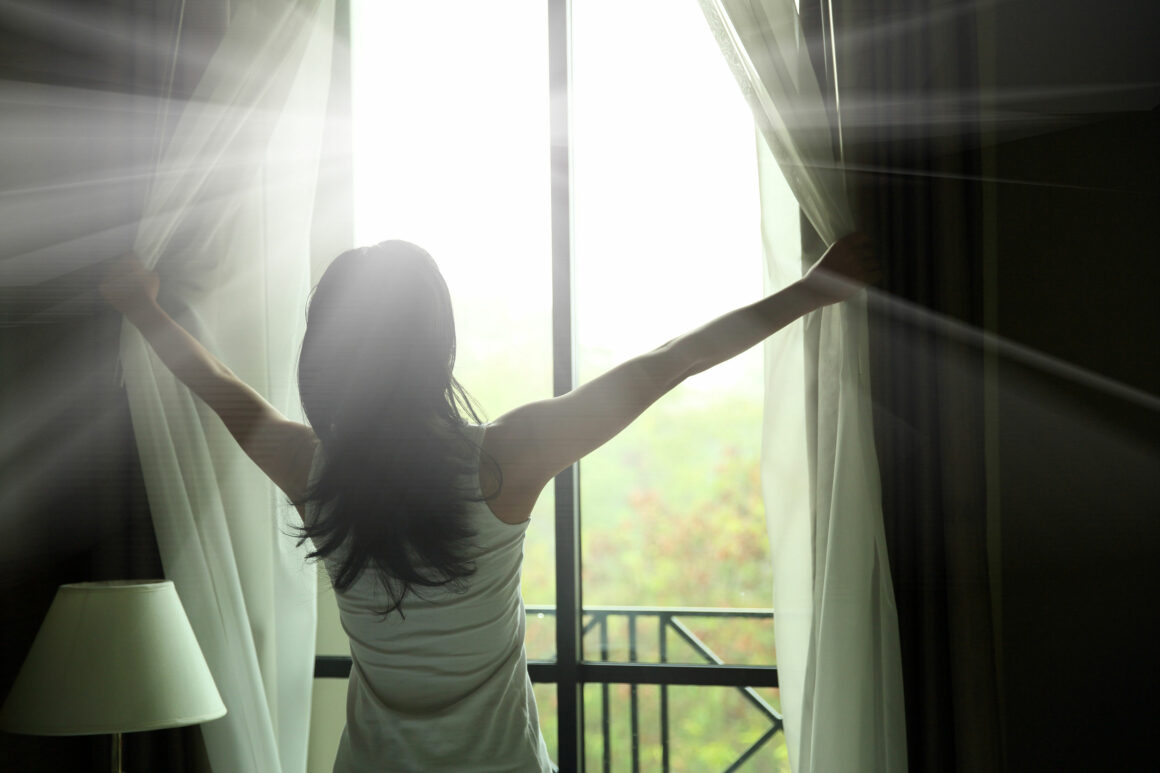
Light helps to program your body’s internal clock, or circadian rhythm, to help improve your overall well-being. Your circadian rhythm is what causes you to have more or less energy at different times throughout the day. If your rhythm is “off”, you might feel drowsy in the middle of the day but have tons of energy at night.

If you’ve ever felt this way, you may need to assess the lighting in your living space.

Also referred to as your sleep/wake cycle, your circadian rhythm is significantly affected by the light around you. When you’re surrounded by more light, your body is alert and attentive and when your surroundings lack light, you lose energy and performance ability.

Is the Light in Your Home Hurting or Helping you?

Sleep Quality

how to improve sleep quality

If you’re wondering how to improve sleep quality, use the lighting around you to regulate your sleep/wake cycle. During the day, keep bright lights on in your home and use lamps at your desk to keep you alert while working.

At night, start dimming the lights and using less of them to get your body to wind down. You’ll feel more alert when you wake up—and might not even need your alarm clock—thanks to light’s influence on your circadian rhythm.

If you use lights correctly throughout the day, you will get adequate sleep by sleeping longer every night. But most importantly, you’ll feel your best the next day. Most adults need between seven and nine hours of shuteye every night.

Mood Swings

This benefit is self-evident: when you get better sleep, you’re in a better mood. And when you go through your day with a smile on your face, your (and everyone else’s) day is that much better.

This is why we tell our kids to take a nap if they’re feeling cranky. But this practice shouldn’t stop at childhood. Adults also need sufficient sleep to stay happy.

Believe it or not, the right amount of sleep can do wonders for your mental health. When your environment is lit up with natural or artificial lights, you feel happier.

Researchers have discovered a previously unknown type of photoreceptor cell (called intrinsically photosensitive retinal ganglion cells) in your mammalian retina that detects light and relays information to your brain to help regulate your mental well-being.

Now that you know how to improve sleep quality and how to improve mood swings, how can you get the benefits of light in your own home?

The idea is to have the lights in your home mimic the natural patterns of the sun. By doing so, your circadian rhythm syncs up with the natural environment and your daily routine. When natural light isn’t available, artificial light can work as well.

Hånsen Lighting offers a variety of lighting options for installation throughout your home so you can feel the way you should at any time of day.

How Mood and Light are Connected

About Hånsen Lighting

Hånsen Lighting doesn’t just offer lighting options that beautify your home. We provide solutions that promote the Danish concept of “hygge”, so you can feel cozy and happy all day.

As you use different lights throughout the day, your sleep quality and physical well-being are improved.

See what Hansen can do for you!


Unhealthy Light May be the Reason Why Your Kids Aren’t Sleeping

Putting your kids to bed is a battle, to begin with, but ensuring that they’re actually sleeping after you’ve tucked them in, raises just another problem to face. Well, what if we told you there are some contributing factors to why your child won’t sleep (other than the fact they’re just a normal kid who shows bedtime resistance)?

What if we told you there is actually a connection between light exposure and sleeping habits? We want to talk about “unhealthy” light and its effect before bedtime and have you consider some things to help your child sleep better.

Too Much Light

Too Much Light Before Bed

Let’s understand one thing: Light exposure prevents the secretion of melatonin, a hormone that naturally regulates sleep. Melatonin secretion naturally rises in the evening, causing the body clock to prepare for sleep. So, if a person is exposed to too much light in the evening, the melatonin in their bodies is suppressed. If they don’t encounter light exposure, their bodies are potentially able to secrete melatonin even earlier than their typical bedtime. Basically, we’re trying to tell you that too much light can impact sleep quality–furthermore, it can impact the duration of sleep, leading to other problems.

Additionally, children are even more affected by the correlation between light exposure and sleep because they see light more strongly than adults. According to multiple studies, preschool-aged children’s pupils are larger than the average adult’s, which allows more light to their retinas and stronger signals to their body clocks. So, as parents, you can’t fully understand how much light your child may actually be experiencing before bedtime, but you can avoid this problem by eliminating as much bright light as possible in the evening leading up to their bedtime. Of all the things to help your child sleep at night, this is the most crucial.

To determine whether or not your child’s melatonin response has been affected, notice if they’re tired and wired in the evening. Your child may give off signs of tiredness, but their body clock isn’t sending the appropriate signals to promote sleep. In this case, your child is probably popping right up out of bed making requests, sauntering in and out of the bedroom, etc. If this is the case, it’s your job as the parent to dim their environment. Turn their bedroom into a cave-like atmosphere to encourage sleep and naturally, they will be more prone to falling asleep.

Here are other things to help your child sleep:

  • Remove night lights, alarm clocks, etc.
  • Cover windows with blackout curtains to cover artificial light from street lights.
  • Use red-toned lights in hallways and bathrooms in case they need to go to the bathroom in the night–but avoid blue or white light because this will disrupt their sleep.
  • Keep the house cooler at night to facilitate better sleep.
  • Use sound machines to help children stay asleep.

These tips and tricks are easier said than done–making a bedroom dark for an adult should be fairly simple (as long as you’re not tripping over objects), but most children fear the dark and find comfort from night lights. By transitioning away from night lights, your child will benefit from this change both presently and in long terms. If your child insists on a night light, keep them low and near the floor, for you don’t want anything directly shining into their eyes.

How Natural Light used to Dictate  

Sun shines through the window in the morning.


Lack of sleep and “unhealthy” light exposure is a more recent problem compared to earlier ways of life. Now, it’s become even worse for children. Here’s why: the grand entrance of electric light in the 19th century was both negatively and positively received. But regarding sleeping patterns, it had a poor influence. Before people had pervasive lamps and light bulbs covering every surface of their homes, circadian rhythms (physical, mental, and behavioral changes that follow a daily cycle–primarily dealing with light and darkness) were dictated by natural light. It only made sense for people to wake when it became light outside, and to retire early as darkness came.

That being said, we don’t live in those times. Electric light has become a prevalent part of our world, whether we realize it or not. You can and should still use the gift of electric light, but be selective in considering what things to help your child sleep–like choosing what kind of light you want in your private home, for example. Make intentional choices about what kind of light is in your home, especially as this is a place you may spend most evenings.

——————————————-

To ensure a better night’s sleep, we believe in modeling natural light as much as possible here at Hånsen Lighting. Different lights can give off different emissions to mock the way the sun operates at different times of the day. By implementing this type of natural light in the home (rather than artificial light), your children are guaranteed a better night’s rest because their circadian rhythms will be more aligned with a daily cycle.

About Hånsen Lighting

Here at Hånsen, we don’t only focus on the aesthetic of our lighting fixtures, but we really take into account which types of light are healthiest for users. Hånsen Lighting promotes hygge–the Danish idea that coziness and comfort lead to contentment and total well-being. Because we believe in this principle, we’ve structured our lighting systems around this idea to reduce stress and invite safety and wellness into the home.

Through different levels of brightness, angles, and the colors of light the sun gives off in a day’s worth, we’ve designed our lights to imitate the natural cycles of the sun resulting in a healthier and happier home. Essentially, the type of lighting you choose can create a more welcoming, joy-filled space for you and your loved ones. Find out how healthier light can make a difference in your home.

Add Healthy Lighting to your Home Today!   

12 Simple Bathroom Updates You Can Do Yourself

Bathrooms are spaces that often go overlooked, but when they’re spruced up, they add some serious value to your home! Remodeling can take loads of time and effort (not to mention money), but giving your bathroom a facelift doesn’t have to. These simple tips can give you the bathroom of your dreams.

1. Organize

The last thing you want to deal with at the beginning and end of your day is CLUTTER. Give yourself the gift of a good system! Containers may seem unnecessary, but when you’re rushing out the door, it saves you a headache to just have an easy home for all your toiletries.

2. Add Greenery

Plants bring life, peace, and tranquility into a space. This bathroom would be the perfect escape from the stress of everyday life. The warm tones mixed with the green tell you to relax and take a break. Who are you to tell them no?

3. Change the Hardware

Arguably one of the easiest ways to take your bathroom from the early 2000s to today without spending a fortune is changing the hardware on your cabinets. Finish options are endless! The bathroom above uses gold accents to create a cohesive look with a modern feel.

4. Spruce Up the Walls

If you’re looking for a simple way to make a big impact in your bathroom and have a free weekend coming up, a fresh coat of paint and some elbow grease will make your bathroom feel like a brand new space with just a few hours of work! 

Want to take it to the next level? Bold wallpapers are in, and they really let you show off your personality! This bathroom incorporates the best of both worlds with a simple, painted board and batten wall on the bottom and wallpaper on top! It’s not as hard as it looks – check out this quick tutorial!

Renter-friendly option: Removable peel and stick wallpaper will give you the same look without having to commit long-term. Love the board and batten? There’s a renter-friendly tutorial for that too!

5. Update Mirrors

Bathroom mirrors are often neglected, but they totally change the feel of the room – don’t leave them out! These wood-framed mirrors bring warmth to this bathroom’s design and help to balance out all of the cool tones and polished finishes. 

Renter-friendly option: If replacing your mirror is out of the budget or you’re renting, adding a wood frame to an existing mirror is an easy one-weekend DIY project – just make sure you can easily remove it if you’re renting!

6. Paint Your Cabinets

Painting your bathroom cabinets may take a little effort, but it’s a great way to unify your space or to add a fun pop of color your bathroom. With just a small can of paint and some time, you can take your bathroom from basic to beautiful, even with a low budget. This bathroom’s painted cabinets help to ground the space, and provide much-needed contrast that takes the design from bland to balanced.

7. Replace Old Light Fixtures

Replacing a ceiling or wall light in your bathroom with a modern fixture that’s more your style will give the entire room an instant style boost! You don’t have to play it safe here – find a fixture you love and jump in! We love the way this bathroom shows some serious creativity with these pendant lights that highlight this AMAZING wood accent wall. 

Many homeowners are wary of swapping out light fixtures, but it’s usually a pretty simple DIY. We recommend starting with your vanity light first if you’re on a budget – great front-facing light by the mirror will make the biggest impact on your morning routine!

8. Layer Your Light

Every room in your house should have several light sources to make it feel more comfortable and eliminate harsh shadows and dark corners. In a living room, that’s as easy as tossing in a few lamps, but layering light in a bathroom can be a little trickier.

This bathroom uses a combination of pendant lights and recessed lights to make the whole space feel bright and airy. If your bathroom lighting isn’t working for you, installing an extra wall or ceiling light is the best way to go from dark and dingy to light and bright. 

If your bathroom’s already finished and rewiring isn’t in the cards – don’t worry! Fortunately, there are a lot of easy do-it-yourself options out there. 

LED light strips like the ones in this bathroom are inexpensive and as easy to install as a sticker! They’re usually used behind the mirror or under cabinets, but they can go anywhere you want some extra light. 

You can also replace a light switch or outlet cover with one that has a built-in light – no more blind fumbling for a switch in the middle of the night.

Renter-friendly option: Get a motion-sensing plug-in outlet light or a rechargeable countertop light! These are both non-permanent ways to add a layer of light and keep yourself from bumping into the counter in the dark.

9. Update Faucets

Another way to update the look of your bathroom and conserve water is by switching out your faucets. Look for a faucet with a WaterSense label to reduce your sink’s water flow by 30 percent or more. Less water flow means a lower water bill. With a lower water bill, you’ll have some extra change in your pocket to take your family out for dinner (or yourself–you deserve it!).

10. Dim the Lights

The lights in this bathroom make it a retreat from chaos. When you want a calming bath, dim the lights for optimal relaxation. Dimmable lights give you the flexibility to turn your bathroom into a spa.

Bonus points: Since dimmable lights are more energy-efficient, installing a dimmer switch will leave you with extra money to do more with your bathroom!

Renter-friendly option: Use other lower-light options like strip lights, countertop lights, or LED candles like in the bathroom above.

11. Add a Backsplash

The metallic accents and painted vanity in this bathroom are to die for, but what really makes this space magic is that classic backsplash. Not only does it breathe new life into this space, but it also protects the wall from moisture and staining, so you won’t have to worry about mold or mildew. With a little DIY magic, this bathroom feels complete!

Renter-friendly option: Use a peel and stick backsplash instead! It’ll look like tile without actually being permanent.

12. Update Your Tile Floor

While tile may be a bigger time or money investment, this bathroom clearly shows that it pays off. If you’re wanting to update the floor, choosing a unique tile like this is the way to go. Pro tip: while real tile will give you the best result, you can actually use a stencil to paint your floor. It will give it the same look for a fraction of the cost!

Renter-friendly option: Use removable flooring (peel and stick) to look like custom tile, or cut a vinyl piece to fit the size of any existing tile.

————–

Don’t let your bathroom fall between the cracks any longer! When you’re ready to take it to the next level, give our experts at One Stop Lighting a call. We’d love to help you get started and give you more tips like these.

5 Tips to Create the Dreamiest Porch

The front porch is an often overlooked space which is, in our humble opinion, a shame. A cozy front porch is a perfect refuge from any inside chaos. It’s the first thing a guest sees and a private place for an intimate conversation with a close friend or family. Here are some tips to help you create the front porch you’ve been dreaming about:

  1. When in Doubt, Add Plants
  2. Let Your Door Speak For Itself
  3. Lighting, Lighting Lighting 
  4. Less is More!
  5. Pick Comfortable Seating

1. When in Doubt, Add Plants

One of the simplest ways to level up your porch is to add some plants and flowers. Choose real plants if you have the time and motivation you to keep them alive or, if your thumb is less-than-green, just stick with faux. Either way, a little bit of green adds a lot of life and color to a house!

Throw a couple of potted ferns like these on either side of your door to add a touch of green without going overboard. Simple, but effective.

Look, we know not every house is blessed with beautiful draping greenery like this one, but who could resist this Secret-Garden-like oasis? If you’ve got a green thumb, this front porch is one to aspire to.

Flowers

If you want to turn the head of any passerby, flowers are the way to go. They add a pop of color and are a guaranteed way to brighten everyone’s day!

Potted flowers are a good solution if you have a minimal front yard or no flower beds. This porch’s flowers are to die for, but you don’t have to have this many for a stunning result! Even tossing a couple of pots next to your door can add vibrance and life.

Hanging flower baskets are a classic way to add some dimension to a porch. Choosing to hang flowers instead of having them on the ground can also save space so you won’t have to sacrifice the porch set you’ve had your eye on.

2. Let Your Door Speak for Itself

You can do a lot to dress up a front porch, but if the door is lackluster, you’ll be hard-pressed to make the rest of the porch shine. Whether you paint your door, replace the hardware, or replace the whole door with something more your style, don’t forget to give it some TLC!

Whoever picked the color on this door should be given an award! This minty green pops against the red brick, and the gold hardware ties the whole look together.

A simple wooden door can bring warmth to a neutral-painted house like this one. We love how the sconces match the hardware on the door of this home to create a cohesive look. Even the smallest detail is accounted for and we’re impressed! 

3. Lighting, Lighting, Lighting

Lighting is a simple way to take your porch to the next level. There are tons of options to choose from, but two of the most common (and effective) front porch fixtures are sconces and pendants. If you have a larger porch, you should also look into recessed lighting to give you more light.

Sconces

A sconce is a wall-mounted light fixture that’s often used next to or above the front door. Picking the right ones for your house makes a big impact on your porch’s aesthetic and style. Check out how well these homeowners did!

These sconces have a rustic feel that contrasts beautifully with the white siding. They give this home just a spritz of farmhouse!

This sconce has a little more flair but is still a classic style you won’t need to replace when trends change. We also giving this porch bonus points for the fan above the rocking chairs! There’s nothing better – or more refreshing – than a cool breeze in the summertime.

This porch’s clean lines flawlessly match the sconces, giving the whole look a modern edge we love!

Pendants

A pendant is a light fixture with a cord or chain and usually just one light attached. They’re commonly used above a door in an entryway with a higher ceiling. Pendants are practical, but they also make a gorgeous focal point. Here are a few to inspire your next porch project!

The warm stone flooring on this porch needs some contrast to make it feel up to date. The black-finished pendant combined with the matching black door complete the whole ensemble.

This porch is timeless. A warm door combined with a simple, but elegant pendant is a classic combination to make any house feel inviting.

Pendants are incredibly versatile and work well in a number of locations – not just above the doorway. They’re also a great choice above porch furniture to create a comfy space for a leisurely chat with a friend.

4. Less is More!

Redoing your front porch can feel overwhelming, but it doesn’t have to be. These simple porches prove that less really can be more with some expert advice!

There’s nothing prettier than a warm wood door and black shutters, especially on clean white siding. This porch has. it. all. Symmetrical greenery, gorgeous sconces, some simple furniture, and a fan are truly all you need to have a beautiful and functional porch.

If you have a small porch, using some hanging elements (pendants, flowers, etc.) will add dimension and will give you space for some furniture without sacrificing a beautiful result.

We love the creativity of this small porch! Since there’s no room for plants next to the door, this homeowner added greenery on the sconces. The arched window above the door is the prettiest focal point to bring together an elegant, but minimal look.

This porch looks bigger because of the reflection of the windows on the door. The rest of the space is also well-used. From the small plants placed on stands to make them look taller to the hanging pendant, every inch is accounted for!

5. Pick Comfortable Seating

There’s something nostalgic about sitting on the porch on a summer night – like an ode to the simpler times of days gone by. Picking comfortable seating will make you want to sit on your porch, reflecting and enjoying the simplicity of the moment.

Porch Swings

There’s nothing more soothing than the back-and-forth motion of a porch swing!

The cozy cushions and pillows on this swing make it the ideal spot to snuggle up with a blanket for an autumn nap or to curl up with a book.

This swing lends itself perfectly to a conversation with a friendly neighbor, family member, or friend.

Rocking Chairs

Make the most of warm spring and summer days by relaxing on a rocking chairs with an ice cold lemonade sitting on a table beside you!

Rocking chairs are a comfortable seating option, but they take up less space and aren’t quite as permanent as a swing. The pillows on these pretty white rockers tie in the shutters on the house and are the perfect spot to enjoy a bit of nature.

Rocking chairs are simple and inviting whether they’re styled or not. We love the idea of watching the neighborhood kids ride their bikes, watching the dogs be walked, and seeing the world slow around you as the sun sets from the comfort of your rocking chair.


Don’t let your front porch fall by the wayside any longer! When you’re ready to get to work creating the porch of your dreams, give One Stop Lighting a call. We’ll give you all the tips you need to make your dreams a reality.

Upgrading Your Lighting on a Budget

All the Tips, Tricks, and Secrets You Need to Make Your House Shine on a Dime

If it’s been a while since you redecorated, your current home decor probably isn’t speaking to you anymore. When you’re short on time, updating the lighting is one of the fastest ways to make your home look, well, brighter. But, when you’re on a budget, replacing everything in the house just isn’t the right call. The good news is – you don’t have to! Here’s a few easy, creative, and budget-friendly ways to make your home feel bigger and brighter… without breaking the bank.

1. Swap Your Light Bulbs

Many people blame an old fixture for their lighting woes, when really it’s the bulbs to blame. Try swapping out your old bulbs with a fresh set of brighter LED bulbs!

While LED lights may cost more upfront, they use at least 75% less energy – which means they can give off more light and use less power. They also last up to 25 times longer than traditional light bulbs, so they’ll last for years before they need to be replaced. 

2. Do it Yourself

The cost of lighting installation can eat away at your budget quickly, but it can reduced if you’re willing to do a little research and put in some work. Installing lighting yourself can give you some extra cash to get lights you love.

Before tearing out any fixtures, educate yourself on the proper safety precautions! If you’re unsure about doing it yourself, don’t forget to budget for the professional help you’ll want!

3. New Shades, New Me

If your light fixture comes with shades – whether they’re glass, fabric, or metal – you might be in luck! Did you know you can replace the shades or globes on most fixtures that have them? A new set of shades is WAY cheaper than buying an entirely new light fixture, and it will make just about any fixture feel brand new again! With a like-new fixture, your space will match your style, leaving you (and your wallet) feeling happier.

4. Refinish Your Fixture

Another alternative solution to buying a new light is changing the finish of your existing fixture. With a little rub n’ buff and a handy youtube tutorial, your light will look totally different! This may need some touching up down the road, but when you need a quick fix to get you by until you can invest in a higher-quality fixture, a little DIY magic can help stretch your money. A little finish can take your fixture from outdated to updated while keeping your budget happy. 

5. Mirror, Mirror

In our opinion, quality lighting makes the biggest difference in a home, but adding mirrors can also increase light–if they’re well-placed. Hanging a mirror near a light or window can help reflect light, making the space look brighter and bigger. That reflected light can go a long way in lighting up a dim room!

6. Focal Point Focus

Another way to make your space look upscale is picking a more expensive light to be a focal point, while adding other less spendy lights to light up the room. The eye will be drawn to the focal point and won’t notice anything else! To start, install a chandelier to draw attention away from any existing recessed lights. Throw in a floor lamp where you need some extra lighting and–voilà! Your eye will be drawn to the chandelier, but the room will still be beautifully lit.

7. Add Lamps, Lamps, and more Lamps!

When in doubt, add a lamp! They’re cheaper, require little to no installation, and are a great design piece. Tabletop lamps make great decor for your tablescape and can light up a workspace. Floor lamps create a homey conversation area in a living room. Lamps are a super versatile, budget-friendly option to give just the touch of light you need.

—

We know that when you’re on a budget, every penny you spend matters! To be sure you’re spending all of them wisely, give us a call! We’ll match you with the best lighting solution for your budget and save you money so that you can get lights you love.

Step-by-Step Guide to Home Lighting Renovation

How to Plan, Prioritize, Budget, and Make it Happen

Updating the lighting in your home is one of the quickest ways to give your house a facelift. It’s easy to accidentally overspend on your house’s lighting if you don’t have the right information, but not to worry! With a few pro tips and some help from One Stop Lighting, your home will feel brighter and look better – without breaking the bank.

1. Make a Plan

Before you start tearing lights out, pull up a chair and make a solid plan. When you’re on a budget, prioritizing which spaces need the most love is key. Look in each room and make sure all your spaces have multiple lighting sources to eliminate shadows and illuminate workspaces. 

Once you’ve done that, think about lighting focal points. Where do you want your lights to make the biggest impact? A few places to consider starting are: above the dining room table, in the living room, and in the bedrooms.

Pro tip: Make a list of all the fixtures you want in order of importance–it will come in handy later!

2. Evaluate Your Budget

Do your research and be realistic about your needs and wants. Knowing how much you can spend and being an informed buyer will help you make the most of your money and avoid overspending. 

Take a look at your budget and decide on two numbers – the amount you’d like to spend, and the highest amount you’re willing to spend. Then, put together some ballpark estimates for the fixtures you want. 

When you walk into the showroom prepared, you can put your money where it matters most!  It’ll also help us to know what price range you’re looking at to match you with the perfect fixture!

Pro tip: Don’t forget to include the costs of professional installation and light bulbs in your estimate! 

3. Prioritize Your Needs

If you’re renovating on a budget, ask yourself: Which light fixtures will make the biggest difference in my house? Remember that list of fixtures you made earlier? Pull it out and prepare to rearrange it. 

Prioritize fixtures that give off ambient, or full-room, light. Once you have those at the top of the list, move on to task lighting. Any workspaces will need additional lighting above them (kitchen counters, bathroom vanities, desks, etc.).

If you still have room in your budget, consider adding accent lighting to features in your home you want to highlight. Moving from general to specific will help you narrow your focus to what really matters, and light your house without running low on change.

4. Pick Your Fixtures

It’s easy to get sticker shock when you start looking at light fixtures. When you’re choosing lights for your renovation, you have two options: you can get a cheap fixture that will work for now, or you can get a quality fixture that will work for years. 

While there is a time and a place for inexpensive fixtures, just remember that buying lights that will stand the test of time will actually save you money in the long run. 

You also need to keep in mind how often you want to redecorate. Trendy fixtures will look outdated much faster than classic styles. If you don’t want to be repeating this process again in 5 years, get a classic, quality fixture that won’t need to be replaced when the fads change.

Pro Tip: Selling your old fixtures online can give you a little extra to put towards your next lighting purchase.

5. Remember the Bulbs

While LED lights cost a little more up front, they use at least 75% less energy, and they last up to 25 times longer than traditional light bulbs. To be sure you’ll see savings on your electrical bill, look for bulbs with the Energy Star rating logo on the packaging. 

Don’t make the mistake of buying bulbs that you’ll just have to replace in a few months! Be sure to work LED bulbs into your budget–we promise it’ll pay off!

6. Do It Yourself

One major cost of updating lighting is installation. In many cases, a handy homeowner with the help of a few Youtube tutorials can save money by doing it themselves. You may also consider installing some lights yourself and having others professionally installed–dropping a heavy chandelier would put a dent in your budget (and your floor)!

However, if you’re going to go this route, researching and implementing all the safety precautions is non-negotiable. Being well-educated can save you from causing a fire, burns, or other safety hazards.

If you’re unsure about doing it yourself, no worries. Just make sure to factor the professional help you need into your overall budget!

—

Updating and replacing lighting on a budget can feel like a daunting task, but with these tips and our expertise, you can’t go wrong! The step-by-step guide we made will help you have amazing lighting without feeling financially strapped.

If you get stuck on any of these steps, give us a call and we’d love to chat about solutions.

3 Ways to Layer Light and Level Up Your Interior Design

Have you ever been to a friend’s house whose home has that X factor? Something that made it seem really inviting even if their decor wasn’t notably upscale? That friend probably had great lighting.

Color, shape, and texture are the building blocks of interior design–but lighting dictates how everything comes together. So, what goes into a well-lit room? Design experts recommend having 5-7 different light sources in any space. These “layers” of light make it so that you can customize the mood, function, and comfort level of a room depending on how you’re using it.

There are three basic layers of lighting to consider: ambient, accent, and task lighting.

Read on to see how these layers of light work– we’ll show you exactly how things like location, bulb choice, and design combine to give you the perfect lightscape. Then the ball’s in your court! Working layer by layer, and with just a little bit of insider lighting know-how, it’s easy to give your home that X factor too– without having to replace a single decorative pillow.

Layer One: Ambient Lighting

The most basic level of lighting for any room is ambient lighting. Ambient lighting is the light that fills the room, casting an even glow from overhead. In most homes, this will come from a central flush mount (often the dreaded “boob” light), a ceiling fan and light combo, or can recessed lights.

Let’s dive into top considerations to creating great ambient lighting.

Location

If you are using one large light as your ambient light source, keep it central with maximum light flow. It’s usually a good idea to use a glass covering instead of metal or wicker shades to avoid creating shadows.

If you want to create ambient light with a grid of recessed lights instead, spacing is critical. An easy trick to determine how far apart your recessed lights should be is to divide the height of the ceiling by 2. For example: For 8-foot ceilings, divide 8 by 2 (8÷2=4) – consider staggering your can lights about 4 feet apart for optimal lighting.

Pro Tip: This formula will get you started, but there’s a lot to consider if you’re installing a new grid of recessed lights in your home. The size and trim can vary greatly, which will have a big impact on light coverage– and you need to take the shape and layout of your room into account. If you want help getting your recessed lights spaced correctly, stop by our showroom and check in with one of our lighting specialists!

Bulb Choice

Each room of your home will have different bulb requirements. For your kitchen, bathroom, and office, lean into brighter, cool light. These bulbs will activate your brain for better concentration and focus. Look for bulbs that say “bright white” or “daylight” on the packaging.


On the other hand, bedrooms and living rooms are usually dimmer and warmer to encourage relaxation. These bulbs will say things like “soft white” or “warm white” on their box.

Design Tips

While there’s not necessarily a one-size-fits-all solution, great ambient lighting will completely transform the way your room feels. Here are a few tips that will translate across most rooms and decor styles:

  1. Consider replacing the standard “boob” lights. While they’re great at lighting a space, the shape of these lights can sometimes feel boring or dated. Don’t be afraid to get creative– there are so many other options available!
  2. Play with paint colors: the color and tone of your walls have a big impact on how the ambient light reflects. Check your paint samples at different times of the day to see how they look with both daylight and your light fixtures. 
  3. Think about going bigger! If a flush-mount fixture feels underwhelming, take a look at other options like ceiling fans or pendant lights. Chandeliers are also making a comeback– they’re not just for vintage vibes! You can play up crystal delicacy for a soft touch in a modern room or branch out with wood beads or other designs.

Pro tip: If you’re planning on replacing your ceiling fixture yourself, make sure your new light is properly supported. You might need to install a sturdier electrical box to support the extra weight of a larger fixture– just check the installation guide before you get started!

Layer Two: Task Lighting

The next layer of your lightscape is task lighting. Task lighting shines extra light on a space to make doing a specific task easier and/or safer. It’s especially helpful for tasks that involve working with small objects, like sewing, or that require concentration, like reading.

Location

You need task lighting anywhere you are performing detailed work. Your home likely already has some task lights installed in common places, such as a bright wall sconce over the bathroom mirror where you get ready, and pendants or recessed lights above a kitchen counter. 

Lamps are the real MVP of task lighting, because they can go anywhere you can run a cord. You’ll find them sitting on a desk, in the garage over a workbench, illuminating the music on a piano, next to a cozy reading nook, on the bedside table, and more. 

Bulb Choice

Task lighting usually uses bright white light to get the best view and activate the attention centers of your brain. There are a few exceptions, however. If you’re lighting a reading nook or a bedroom you’ll want softer and/or warmer light to get that cozy comfort.

Design Tips

Even though task lighting is “task-oriented,” it doesn’t need to be 100% utilitarian. Here are a few ways to think about making your task lighting both beautiful and functional:

  1. When possible, work with odd numbers of light– it will feel more organic. For example, 3 or 5 pendant lights will look usually better over a kitchen counter than 4. 
  2. Experiment with different materials for lampshades. A glass shade will maximize the glow, woven shades will give a light filtering effect that softens the light, and opaque shades will concentrate the light. You can completely transform the way a lamp or pendant lights your space with a simple shade swap! 
  3. Don’t forget your bathroom vanity! Most vanities have a light above the mirror– but that’s not necessarily the best placement for getting ready. Face-level light on either side of your mirror is best for doing things like applying makeup.

Pro tip: Did you know that LED light is widely considered the best lighting for applying makeup? It’s the closest to natural daylight! Try a backlit mirror or LED strips at facelevel to see your makeup’s true colors.

Layer Three: Accent Lighting

Accent lighting is the fun layer– it leans much more into design than function. The purpose of accent lighting is to create a mood, or to highlight a specific feature in a room like an architectural detail or a piece of art. 

Location

Unlike ambient or task lighting, accent lighting doesn’t have a simple rule for best placement. Whether it’s hanging from the ceiling, sitting on a shelf, or standing on the floor, accent lighting can come from anywhere and shine on anything. 

One way to determine where you need accent lighting is by thinking about your favorite evening activities. For example, where do you and your family cuddle for movie night or bedtime stories? Turn off your ambient lighting and see where you need a lamp, some sconces, or LED strips.

Pro tip: Plan on having 2-3 sources of accent light per room.

Bulb Choice

Accent lighting that’s highlighting a feature is typically small and bright. For accent lighting that’s creating a mood, look for dimmable options. Either way, you’ll need warm bulbs to achieve a cozy glow! Look for bulbs that say “soft white” for the gentlest light, with “warm white” as a close second. 

Accent lighting opens the door for you to get creative! Check out some color-changing smart bulbs or LED strips that can really change the way your room feels with just the touch of a button!

Design Tips

Accent lighting is very specific to a person and their space, so there aren’t any hard-and-fast rules. Here are a few ideas to get your imagination flowing:

  1. Fill in the blank: if you’re missing a color or texture in your room, try bringing it in with an accent lamp. Warm up a modern space with a wooden or stone lamp, or balance your color palette with a new lampshade. 
  2. Choose the unexpected: use sconces and pendants where you’d normally place a lamp. For example, if you have a couch tucked into a corner that could use more light, save floor space by hanging a pendant above the seat.
  3. Track lighting isn’t just about the lights– it can elevate your room by highlighting other decor and collections! Try placing them above your gallery wall to elevate your wall to an art museum experience. 

Pro tip: Renting or want to avoid hiring an electrician? You can still use pendants and sconces! There are special varieties that use a plug– no hardwiring required. 

Ready to Customize Your Lightscape?

Now that you have the guiding principles ready, the possibilities are endless! If you’re ready to get serious about your home’s lighting and design, the experts at One Stop Lighting can help you connect to a showroom near you. Contact us today!

9 Surprising Ways to Glow Up Your Home Exterior (Literally)

Most neighborhoods look the same when you drive at night. Because no matter what makes homes unique during the day, they almost all only use a porch light or two at night. But your home doesn’t have to lose its character and statement features just because the sun went down!

You may be surprised that there are at least nine ways to light your home’s exterior. We’ll dive into expert tips to unlock the unexpected for your evening curb appeal and outdoor activities. From increasing safety to creating drama to inspiring luxury, mix and match these lighting methods to customize an unforgettable “evening look.”

1. Accent Lighting

Accent lighting uses light to draw attention to a feature of your home or garden. In fact, any of the following eight lighting techniques can be used as accent lighting! For example, try using a spotlight to show off a flagpole, up-lighting on a few trees to increase their impact, or silhouette shrubbery for subtle mystery.

A tip from the experts: Trying to figure out what to accent on your home exterior? Make a list of your favorite things about your front yard (or what you’d like to add to your yard).

2. Down-lighting

Want to increase visibility for outdoor activities? Try down-lighting! This lighting technique positions the light source up high with a shade that concentrates the light towards the ground. The bright light makes evening play safer and keeps the party going after sundown.

A tip from the experts: Trees are a great place to nestle down-lighting sources with finesse.

3. Highlighting

You’ve likely seen yards in a fancy neighborhood that look like their trees are glowing somehow. They’re probably being highlighted! By shining a spotlight or two from the base of a tree or other feature, the light will reflect only off the object. This concentrated glow makes the object look like it is lit from the inside!

A tip from the experts: Highlight is a simple way to immediately make your home look upscale and luxurious.

4. Moonlighting

Are you looking for more magic and romance in your outdoor space? Then try out moonlighting! Like down-lighting, moonlighting uses a high-up light source to concentrate light downwards. However, this method uses more subtle sources and dimmer light– mimicking the softness and mystery of a full moon!

A tip from the experts: Moonlighting is most effective in backyards and wooded areas, where the soft light can trickle down through the leaves.

5. Silhouetting

Silhouetting is the opposite of highlighting, but its effect is equally dramatic. Instead of lighting the feature itself, you can use the light source behind a tree and the wall. This will shine the light on the wall and cast the tree or other features into shadow. So you’ll get the soft shape of your feature, giving impact in a subtle way.

A tip from the experts: Make sure to angle the light towards the wall to create the greatest effect!

6. Shadowing

Want to spread the beautiful pattern of your tree leaves against your home? Then shadowing is the perfect technique for you! Shadowing combines highlighting with silhouetting for a completely new effect.

Like silhouetting, you’ll position your light source towards a wall behind the tree. But, like highlighting, you’ll put the light in front of your tree. As a result, you’ll cast a dramatic shadow of your tree against your home while clearly illuminating the trunk.

A tip from the experts: This works best with tall, leafy trees for an enchanting summer evening. The bare branches will look stunning in the winter too!

7. Path-lighting

Upgrade the magic and safety of your front walk or garden path with path-lighting! Solar lights are easy to install and come in endless designs and colors. Not only will path lights make your home safer, but you’ll get to enjoy your plants and landscaping around the clock.

A tip from the experts: Space your path lights 5 to 10 feet apart, depending on the lamp’s brightness.

8. Up-lighting

Want to add drama with a contoured view of your home? Up-lighting uses spotlights to throw light upwards on your home exterior. You’ll work with the natural layers of your home to create interest and luxury. Even in a cookie-cutter development neighborhood, your home will stand apart!

A tip from the experts:  Try staggering these lights along the ground level and roofline to maximize the impact of your home’s features.

9. Wall-washing

Our final lighting tip brings us to wall-washing. This method uses focused ambient lighting to cast even light across an entire wall. Instead of the dramatic shadowing created by up-lighting, you’ll get a clear picture of the garden or home wall without harsh light.

A tip from the experts: The key to great wall-washing is placing the light source at a wide enough angle. Hide the source in low foliage for added mystery.

Need Help?

Proper lighting is essential to a fully functioning home– but it can be challenging to nail balanced brightness, great fixtures, and a budget! Contact the experts at One Stop Lighting for advice on your project!

2023 Interior Design Trend: Creating a Cozy House that Feels Like Home

It’s 2023 and this is your wake-up call! Your home needs you – it’s ready for a refresh! This year, we’re all looking for a respite from the stress that always seems to work its way in. Designing a comfortable home will make you feel the extra happiness and productivity you’ve been in desperate need of. These 3 expert tips will make your home a haven you’ll be itching to get back to at the end of the day!

1. Choose a Soft Color Palette

It’s no secret that colors have a huge effect on your mood and the feel of a room. These rooms knock the color palette out of the park without sacrificing personal style or comfort. Achieving a soft color palette doesn’t have to be difficult – go with neutrals, a pop of color, or choose a monochromatic color scheme and you’re set!

Neutrals

A neutral color palette seems like an obvious choice when you’re going for comfort, but it can be tough to pull off – without color, other elements like texture or shapes will have to do the heavy lifting.

The heavyweight champions here are definitely the plants! Adding some green to an otherwise neutral-heavy space brings some life and vibrance without destroying the tranquility you desperately need. Finishing this look with a variety of textures and shapes from the hard wood edges to the pair of round tables to the woven area rug makes this space feel comfortable, creative, and cozy.

This neutral bedroom incorporates beige and white with black accents to ground the space. The night stands with pendants hanging above elevate the space, giving you lighting and a gorgeous focal point! We love how this space feels lived-in without looking cluttery. With neutral tones, the soft textures of the rug and blankets are what make this room feel comfortable and cozy.

Picking a neutral color palette for this sitting area really make the shapes shine. We love how arches are carried throughout the design from the furniture to the architecture. This chair looks like a cloud and with the gorgeous light above it, anyone sitting here would feel like they’re in the heavens!

Pop of Color

A cozy home doesn’t have to be colorless! If neutrals don’t speak to you, try mixing them with a pop of color. It’ll give your room some excitement, but not so much that it’ll feel busy or chaotic.

This living room took a bold color and ran with it. The navy blue is a stunning contrast to this cozy tan leather couch. If we could copy and paste this look into our homes, we would! The neutrals pop against the accent wall and we couldn’t be more obsessed.

These red velvet pillows and drapes contrast with the neutral room and bring in some cozy texture. The bright colors spice up what might otherwise feel like a bland living room.

Monochromatic 

Choosing a monochromatic color scheme is a 2023 trend we love. It’s bold, but still soft. In a true monochromatic space, there isn’t extra visual stimuli for your brain to process. This gives your brain a sense of peace and calm you may not feel in a room with more going on in terms of color. These rooms use a simple color palette and the effect is cozy with a touch of elegance. 

Green is one of the most soothing colors. It can bring a sense of peace and harmony to your home. This couch and wall combo is no exception! Choosing to pair them with beautiful browns makes this sitting room look like it was plucked straight from nature, then given a facelift.

This kitchen uses the monochromatic color scheme to make it look bigger than it is. We especially love that extra wood cabinet with accent lighting both for functionality to store more and for decorative purposes. The calming blues make this a space you’d want to do some stress-baking in!

2. Add Soft Textures

Texture is a vital tool in an expert’s tool belt, especially when comfort is your end-goal. A space can be gorgeous, but if it feels like a place your grandma will yell at you for touching anything in, it won’t really feel comfortable. Texture is what takes a space from formal and austere to a beautiful, cozy space you can actually live in.

There’s no question this bedroom is gorgeous, but it also feels like a space you could spend time in without completely messing it up. The intentionally unkempt linens on this corner of the bed add simulated texture that makes it feel like home. We also love the green velvet accent pillow and floor pillows for an extra cozy touch! A lamp and pendant allows you to have dimmer or brighter lighting to accommodate your changing needs.

There is no world where a chunky-knit blanket and lots of pillows won’t scream comfort. The touches of fur on the rug and the side bench give it an extra dose of coziness. Anyone would love to curl up and hibernate here all winter! Light a few candles in the lanterns and switch on the pendant for the perfect reading spot at night.

This feminine bedroom is a corner of paradise! The colors are soft and gorgeous, but the textures are what really make this space magical. The velvet headboard brings delicate softness to the space. The textured pouf and cane-detailed night stand here are working overtime – and they should get paid for it! They bring elements of texture and give some seating and storage space. The blanket and soft rug are the finishing touches that would have anyone making excuses to retreat here for peace and quiet.

3. Soften Your Lighting

Harsh lighting is the opposite of comfortable! It’ll leave you with a headache and can actually make it harder for you to sleep at night. To bring in some much-needed comfort, you’ll need to soften up your lighting. In a room with soft lighting, the transition from light to dark is gradual and easy on the eyes. Avoid harsh shadows and balance your lights out using these three tips and your eyes and mood will thank you!

Dimmable Lighting

Switching to dimmable lights is a relatively simple way to soften your lights and make your lighting customizable. This cozy room is the perfect place to recharge your batteries. Dim the lights 2 hours before bed to help yourself sleep better, then brighten them in the morning to jump start your mood and your day!

Layer Your Lights

Layering your lighting is a fool-proof way to give you adjustable light. Every room in your house should have at least a few light sources to make it feel more comfortable and eliminate any dark corners. Adding a few lamps across a room and some pendants will give you flexibility to have more or less light depending on your need and mood.

Accent Lighting

Accent lights are the finishing touches that make a room feel complete. They’re the piping on top of the icing on the cake! Adding them makes a room instantly feel warmer and more comfortable. Plus, they soften up your lighting by eliminating harsh shadows in areas that might otherwise go overlooked. Put sconces on an empty wall, strip lighting under cabinets like in this kitchen, or pendants above conversation areas. A room with warm, balanced lighting is a guaranteed ticket to having the relaxing ambiance you need for comfort.

—

Listen, it’s 2023 and it’s time you started living your life in comfort! Choosing to design a cozy home is about more than just aesthetics. It’s about overall wellness! You deserve to live in a home you love, so it’s time to get started. With a little inspiration, the expert tips above, and help from One Stop Lighting you’ll be set! Give us a call and we’ll help you soften your lighting and give your home the extra relaxing boost it needs.

How Lighting Affects Your Health

How to Improve Your Sleep by Improving Your Lights

Sleep has massive importance on your ability to perform at your best every day, but it’s one of the most overlooked aspects of health. If you’ve ever spent the night caring for an infant every hour or finishing a paper in the wee hours of the morning, you’ve experienced firsthand the effects of sleep deprivation. Focusing becomes next-to-impossible, and getting through the day awake can be a challenge. 

Improving your sleep is key to having a better mood, better cognitive functioning, and overall improved health. According to the Sleep Foundation, “light is the most important external factor affecting sleep.” Everyone knows it’s easier to sleep when it’s dark, but the link between lighting and sleep goes deeper than that. By learning more about this link, you can learn how to create an environment that will give you the sleep you’ve been dreaming of. 

The Effects of Sleep (and Sleep Deprivation)

Before we discuss changing your lighting to help your sleep hygiene, let’s talk about why sleep is so important to your overall health. When you sleep consistently, you can “think more clearly, have quicker reflexes, and focus better” (NIH). The National Institute of Health says, “sleep…affects growth and stress hormones, our immune system, appetite, breathing, blood pressure and cardiovascular health.” Part of caring for yourself includes improving your sleep.

When you don’t get consistent and continuous sleep (7-8 hours per night for adults), your health suffers. Some of the more obvious effects of sleep deprivation include a worse mood, impaired cognitive functions, and a shorter attention span. But, did you know that not getting quality sleep can also increase your risk of hypertension, obesity, and Type 2 diabetes? While you sleep, your body performs important functions. If you have trouble sleeping consistently without waking up, it’s time to think about your lights.

Circadian Rhythms

Light and sleep are two sides of the same coin. Light regulates your body’s circadian rhythm – your internal clock that tells your body when to sleep and wake. When light enters your eye, your brain processes information about the light and senses the time of day. Then, a signal is sent from your brain to your body to regulate organs and other systems in your body. (Sleep Foundation) 

If you lived in a world where you were exposed to natural light only, your circadian rhythm would align with sunrise and sunset. However, since we live in a modern world where bright lights are available at the flick of a switch, you need to be more intentional about selecting the lights you expose yourself to, especially in the evenings. The lights you’re using may be affecting you more than you realize!

Melatonin

Light also affects the production of melatonin. Melatonin is a hormone your body makes naturally to help you regulate your circadian rhythm. It makes you feel drowsy and promotes quality sleep. The pineal gland in your brain (pictured above) initiates the production of melatonin in response to darkness. When you’re exposed to light, melatonin production slows down or stops. For some people, synthetic melatonin may be recommended or prescribed, but improving sleep hygiene should always be your first step toward healthier sleep.  (Sleep Foundation) 

Light and Sleep Hygiene

While we want you to sleep well no matter what, your body’s circadian rhythm can be a little sensitive. To account for that fact, you’ll need to manipulate your environment a little. Circadian rhythms are particularly sensitive to light two hours before bed and one hour after waking up. During these times, adjusting your lighting is imperative.

If you have bright household or bedroom lights, dimming them two hours before bed will prepare your body for better sleep. Increasing your light in the morning will keep you alert during the day. Getting dimmable lights is one way to control your lights’ brightness. Using several light sources (lamps, overhead lighting, etc.) is also an option. If dimmable overhead lights don’t work for you, find a dimmable bedside lamp instead! In the morning, turn on the brightest lights in your room and bathroom while you get ready to help yourself wake up. (CDC)

Light Color Effects on Sleep

The color of light you choose at different times of the day will also impact your circadian rhythm and night sleep. According to the CDC, blue and white lights make the biggest difference on your circadian rhythm, especially during the sensitive period at night. 

Blue and Bright White Light

White light contains blue light. Common sources of this light are the sun, LED lights, and digital screens. Exposure to white light can help to improve your mood and keep you feeling more alert and focused. During the day, using white light to wake up and to stay productive is a great idea.

If you’re having trouble sleeping, it’s best to avoid blue and white light sources at night. Yes, that means you really shouldn’t be scrolling on your phone in bed – you might think it’s helping you to unwind, but that light is actively disrupting your circadian rhythm. Some phones have a “night mode” that you can enable that will warm up the temperature of the light, which helps a little, but you’re better off reading a book with a warm, dimmed light. 

Yellow, Red, and Orange Light 

Warm Light, seen as yellow, orange, or red, comes from places like a fireplace or an edison bulb. LED bulbs can also be purchased that give off this type of light – they’re often called “warm white” or “soft white.” Yellow and orange lights have very little effect on your internal clock, so picking these colors for your room shouldn’t interfere with the sleep you’re dreaming of. Red light is the only color that has no effect on your circadian rhythm. 

Get Better Sleep with Smart Lighting Choices

Changing your environment to promote better sleep can be as simple as switching out a few light bulbs. Pay attention to which kinds of light you have in your home, especially in the places you spend time at night. If you spend your evenings in the living room under bright white bulbs, that could be impacting the sleep you’re getting.

Fortunately, switching out the color of your light bulbs is a relatively easy fix for most fixtures. To give yourself the best lighting for a good night’s sleep, we recommend choosing warm white bulbs for your bedroom and bedside tables, and for the rooms you use in the evenings, such as the dining room, den, or living room.

Rooms where you need to focus, like the kitchen or your office, often have bright white lighting. Minimize your time in these places, or look at adding lamps or under-cabinet lighting that can allow you to use the room with a warmer, less bright light. 

The multi-use spaces in your home where you need to focus during the day and relax at night can be the hardest. Lamps and/or dimmer switches in these areas are a must for good sleep hygiene. Another option would be to install color-changing bulbs that can take you from bright white to soft white throughout the day. Color-changing bulbs usually require you to change the color manually with a remote. If you’re willing to spring for smart bulbs, many can be programmed to change throughout the day or on command.

We know that fixing your lighting environment won’t magically take away all of the things that keep you up at night. But we can guarantee that making smart lighting choices at home will help you to go from early-morning alertness to late-night drowsiness without your light bulbs messing up your internal clock. 

—

Choosing the right lighting is important for your health. If you need help optimizing your home’s lighting for a good night’s sleep, give the lighting experts at One Stop Lighting a call, or stop by our showroom to chat in person! We’d love to help. Sweet dreams!

—

*Disclaimer: Lighting, while important, won’t replace expert health care. If you have concerns about your sleep, please remember to make an appointment with your doctor.

  • « Previous Page
  • 1
  • 2
  • 3
  • 4
  • 5
  • Next Page »

Recent Posts

  • Improve Your Focus at Work with Light
  • Concentration Hacks for Brain Fog
  • Improve Your Focus at Work With These 3 Types of Light
  • Tips for Good Sleep: It’s not About Counting Sheep
  • Which Forms of Light Cause Long-Term Damage to Your Eyesight?

Categories

  • 2020
  • 2023
  • Accent Lighting
  • Bathroom Lights
  • Bedroom Lighting
  • Bulbs
  • Buying Guides
  • Ceiling Fans
  • Ceiling Fans
  • Ceiling Lights
  • Ceilings Lights
  • Chandeliers
  • Decor & Home Accents
  • Dining Room
  • General Lighting Tips
  • Healthy Lighting
  • Holiday
  • How to
  • Informational
  • Kitchen Lighting
  • Lamps
  • LED
  • LED Lights
  • Life & Style
  • Light Bulbs
  • Lighting Types
  • Mirrors
  • Outdoor
  • Outdoor Lights
  • Recessed Lighting
  • Safety
  • Sleep
  • Smart Lights
  • Styles & Trends
  • Styles and Trends
  • Wall Lights
  • Wellness & Safety

One Stop Lighting

Copyright © 2025 One Stop Lighting