One Stop Lighting
MENU
  • Buying Guides
  • Styles & Trends
    • Bathroom Lights
    • Ceiling Fans
    • Ceiling Lights
    • Lamps
    • LED Lights
    • Outdoor Lights
    • Smart Lights
    • Wall Lights
  • Wellness & Safety
  • Shop Products

3 Top Tips to Boost Eye Health With Proper Home Lighting

Your eyes are responsible for sending about 80% of the total information that goes to your brain so it’s crucial to keep them healthy. While technology has made certain things better for our eyes, it’s also introduced new challenges.

And while it may be common sense that balanced lighting promotes eye health, what really goes into balanced lighting? First, we’ll explain how to create the best lighting for your eye health, then cover three main ways your home lighting habits may negatively impact your eyesight.

Ways Light Affects Our Eyes

Our eyesight is 100% dependent on light– the way it bounces around a space makes it possible for us to  see color, depth, and texture. Without light, there wouldn’t be any data for our brains to process. The quality of light you use has a big impact on your eyes – and your overall health – so getting the right types of light throughout your day is important. It can be a bit of a balancing act!

Bright light is essential to do good work– and working without enough light can strain or damage our eyes. Whether you’re reading a book, working at a computer screen, or slicing up veggies for dinner, you need lighting that supports your focus and subtle movements.

But dim light is also essential to eye health! Living with only bright light can seriously strain your eyes, particularly if you don’t decrease brightness in the evening. Top offenders include office fluorescents, overly powerful LEDs, and of course our phone and computer screens. 

Finally, we need a break from all light every day. Sleep resets our entire body, including our eyes. Dark spaces promote restful sleep, reducing dry eyes, itchiness, and vision-related headaches and increasing healthy eye nerves.

So how do you balance the need for bright, dim, and total darkness? And how does this apply to your home? Let’s dive into some specific tips.

3 Ways to Make Your Home Light Healthier

So, how customized does your home lighting need to be to pull off the perfect balance for your eyes? While high customizations are available, there’s no need to overdo it! By focusing on the following three categories, you can confidently know that your home has healthy lighting.

1. Screen Light

Screens are the number one culprit of today’s eyestrain and deteriorating eyesight for two reasons: the type of light and the proximity of the light.

All tech screens use blue light, from phones to tablets to computers. Blue light sends high-energy waves like the sun. This light spectrum shows true color and activates the brain to pay attention. So it’s typically a good thing that our screens use blue light.

However, shining that bright light at close range for eight or more hours a day can cause a lot of damage over time. To reduce the wear on your eyes from necessary screen time, consider the following tips:

  • Use task or bias lighting. Introducing additional light sources behind or next to your screen will help break up the contrast. Try adding lamps, improving your overhead light source, or sticking an LED strip around the back of your TV or computer monitor  to diffuse the light.
  • Take regular breaks. Experts recommend taking a screen break every hour for 5-10 minutes. Children should take more frequent breaks since their eyes are still developing. Kids should take a break every twenty minutes of screen time
  • Use blue light glasses. Blue light glasses help filter out harmful light waves and allow you to work longer, doing less damage.

2. Match the Light to the Room’s Needs

You use your kitchen, office, and bedrooms in a variety of ways throughout the day, so their lighting should change too! Otherwise you may accidentally strain your eyes with too much or too little light for what you need. With a bit of thought and a few simple tools, you’ll have your high-traffic areas perfectly prepared for all your needs, day or night.

  • Work Zones: Bright light is best for areas where you are performing skilled work. It will help you avoid mistakes and stay alert. So kitchens, offices, makeup tables, garages, and craft areas all need bright lighting. Make replacing current bulbs a priority in these rooms.
  • Resting Areas: Bedrooms, living rooms, and bathrooms are mainly for relaxing. Warmer, dimmer light is better for these locations. This will help you to give your eyes a rest, blend colors, and signal to your brain that it’s time to wind down.
  • In-between Places: You may have some spaces performing multiple functions. Bathrooms are a great example: you need bright light to get ready, but you also need a place to relax with a bath. Consider adding a dimmer switch in these rooms, or test out some color-changing LED bulbs that can be warm or cool with just the touch of a buttom.

Did you know that local lighting experts can help you get the right tools for your space? Bring your tricky areas to them to get help matching the proper lighting for your needs.

3. Types of Bulbs

Finally, let’s talk about bulbs. Your bulb selection will help you get the right balance for your eyes and avoid having them work too hard. Here’s a rundown of common bulb types and their effects on your eye health:

  • Compact Fluorescent Lights (CFLs): These twisted bulbs were trendy in the early 2000s as a domestic fluorescent option. However, fluorescent lighting is generally hard on eyes because it emits more UV rays. They also flicker at a high rate, so even though you likely won’t notice it, flourescents are associated with headaches and eye strain. So we’d recommend using another bulb first.
  • Incandescent: Incandescent bulbs are quickly phasing out as a non-efficient energy light. But, with no UV rays and low blue light emission, they’re “easy on the eyes.” So you could leave a trusty incandescent bulb in your favorite reading lamp!
  • LEDs: LEDs are highly customizable, meaning you can easily adjust brightness and temperature to help reduce strain on your eyes anytime. However, they emit quite a bit of blue light. They also flicker at a high frequency– it’s not visible to most people, but those prone to seizures may be triggered by too many LEDs. In general, LEDs are a safe option!
  • Halogen: Halogen bulbs are very bright, making them great for task and outdoor lighting. They’re also dimmable, making them more flexible than CFLs. However, they can get very hot and have been known to cause fires. Handle these bulbs cautiousl!

A little research will help ensure that you have the best bulbs, lumens, and temperatures for your family.

Need Help?

Proper lighting is essential to a fully functioning home– but it can be challenging to nail balanced brightness, great fixtures, and a budget! Contact the experts at One Stop Lighting for advice on your project!

5 Tips to Create the Dreamiest Porch

The front porch is an often overlooked space which is, in our humble opinion, a shame. A cozy front porch is a perfect refuge from any inside chaos. It’s the first thing a guest sees and a private place for an intimate conversation with a close friend or family. Here are some tips to help you create the front porch you’ve been dreaming about:

  1. When in Doubt, Add Plants
  2. Let Your Door Speak For Itself
  3. Lighting, Lighting Lighting 
  4. Less is More!
  5. Pick Comfortable Seating

1. When in Doubt, Add Plants

One of the simplest ways to level up your porch is to add some plants and flowers. Choose real plants if you have the time and motivation you to keep them alive or, if your thumb is less-than-green, just stick with faux. Either way, a little bit of green adds a lot of life and color to a house!

Throw a couple of potted ferns like these on either side of your door to add a touch of green without going overboard. Simple, but effective.

Look, we know not every house is blessed with beautiful draping greenery like this one, but who could resist this Secret-Garden-like oasis? If you’ve got a green thumb, this front porch is one to aspire to.

Flowers

If you want to turn the head of any passerby, flowers are the way to go. They add a pop of color and are a guaranteed way to brighten everyone’s day!

Potted flowers are a good solution if you have a minimal front yard or no flower beds. This porch’s flowers are to die for, but you don’t have to have this many for a stunning result! Even tossing a couple of pots next to your door can add vibrance and life.

Hanging flower baskets are a classic way to add some dimension to a porch. Choosing to hang flowers instead of having them on the ground can also save space so you won’t have to sacrifice the porch set you’ve had your eye on.

2. Let Your Door Speak for Itself

You can do a lot to dress up a front porch, but if the door is lackluster, you’ll be hard-pressed to make the rest of the porch shine. Whether you paint your door, replace the hardware, or replace the whole door with something more your style, don’t forget to give it some TLC!

Whoever picked the color on this door should be given an award! This minty green pops against the red brick, and the gold hardware ties the whole look together.

A simple wooden door can bring warmth to a neutral-painted house like this one. We love how the sconces match the hardware on the door of this home to create a cohesive look. Even the smallest detail is accounted for and we’re impressed! 

3. Lighting, Lighting, Lighting

Lighting is a simple way to take your porch to the next level. There are tons of options to choose from, but two of the most common (and effective) front porch fixtures are sconces and pendants. If you have a larger porch, you should also look into recessed lighting to give you more light.

Sconces

A sconce is a wall-mounted light fixture that’s often used next to or above the front door. Picking the right ones for your house makes a big impact on your porch’s aesthetic and style. Check out how well these homeowners did!

These sconces have a rustic feel that contrasts beautifully with the white siding. They give this home just a spritz of farmhouse!

This sconce has a little more flair but is still a classic style you won’t need to replace when trends change. We also giving this porch bonus points for the fan above the rocking chairs! There’s nothing better – or more refreshing – than a cool breeze in the summertime.

This porch’s clean lines flawlessly match the sconces, giving the whole look a modern edge we love!

Pendants

A pendant is a light fixture with a cord or chain and usually just one light attached. They’re commonly used above a door in an entryway with a higher ceiling. Pendants are practical, but they also make a gorgeous focal point. Here are a few to inspire your next porch project!

The warm stone flooring on this porch needs some contrast to make it feel up to date. The black-finished pendant combined with the matching black door complete the whole ensemble.

This porch is timeless. A warm door combined with a simple, but elegant pendant is a classic combination to make any house feel inviting.

Pendants are incredibly versatile and work well in a number of locations – not just above the doorway. They’re also a great choice above porch furniture to create a comfy space for a leisurely chat with a friend.

4. Less is More!

Redoing your front porch can feel overwhelming, but it doesn’t have to be. These simple porches prove that less really can be more with some expert advice!

There’s nothing prettier than a warm wood door and black shutters, especially on clean white siding. This porch has. it. all. Symmetrical greenery, gorgeous sconces, some simple furniture, and a fan are truly all you need to have a beautiful and functional porch.

If you have a small porch, using some hanging elements (pendants, flowers, etc.) will add dimension and will give you space for some furniture without sacrificing a beautiful result.

We love the creativity of this small porch! Since there’s no room for plants next to the door, this homeowner added greenery on the sconces. The arched window above the door is the prettiest focal point to bring together an elegant, but minimal look.

This porch looks bigger because of the reflection of the windows on the door. The rest of the space is also well-used. From the small plants placed on stands to make them look taller to the hanging pendant, every inch is accounted for!

5. Pick Comfortable Seating

There’s something nostalgic about sitting on the porch on a summer night – like an ode to the simpler times of days gone by. Picking comfortable seating will make you want to sit on your porch, reflecting and enjoying the simplicity of the moment.

Porch Swings

There’s nothing more soothing than the back-and-forth motion of a porch swing!

The cozy cushions and pillows on this swing make it the ideal spot to snuggle up with a blanket for an autumn nap or to curl up with a book.

This swing lends itself perfectly to a conversation with a friendly neighbor, family member, or friend.

Rocking Chairs

Make the most of warm spring and summer days by relaxing on a rocking chairs with an ice cold lemonade sitting on a table beside you!

Rocking chairs are a comfortable seating option, but they take up less space and aren’t quite as permanent as a swing. The pillows on these pretty white rockers tie in the shutters on the house and are the perfect spot to enjoy a bit of nature.

Rocking chairs are simple and inviting whether they’re styled or not. We love the idea of watching the neighborhood kids ride their bikes, watching the dogs be walked, and seeing the world slow around you as the sun sets from the comfort of your rocking chair.


Don’t let your front porch fall by the wayside any longer! When you’re ready to get to work creating the porch of your dreams, give One Stop Lighting a call. We’ll give you all the tips you need to make your dreams a reality.

9 Ways to Upgrade Your Home with LEDs

With their excellent energy efficiency, affordable price tags, and numerous customized options, LED light bulbs are quickly becoming the top choice for home lighting. Available in small bulbs and flexible strips, these microchip-powered wonders fill almost every need in your home– including some you didn’t even know you had!

So get ready to upgrade your home’s functionality and style! Here are nine ways using LED bulbs in your home can improve your home’s design, costs, comfort, and safety.  

1. Energy Efficient

LEDs are highly energy-efficient light sources because they create light with a microchip. With no gas or burning filament, they waste far less energy in heat production (not to mention much better customization in color, brightness, and temperature. But we’ll get to that later!) 

Unlike older bulbs, LED bulb packaging uses lumens instead of watts to tell you how bright they are. Watts measured the electricity needed for incandescent bulbs to glow, but lumens directly measure the amount of light a bulb gives off. The higher the lumens, the brighter the bulb.

But it’s not just the packaging that’s changed– your utility bill will decrease when you replace incandescent bulbs with LEDs. They use far less energy than incandescent bulbs to give off the same level of light, savings you’ll actually be able to see. 

2. Work with Most Light Fixtures

No matter your light fixture, there’s likely an LED bulb that’s a perfect match. LEDs come in a wide variety of standard-sized bulb sizes and shapes– so you can even use them in your candelabra chandelier! 

The only thing to watch out for is ventilation. LEDs are cool bulbs compared to incandescent and other traditional options, but they’re not entirely immune to overheating. So if you’re ever in doubt, give a local lighting expert a call and they’ll help you find the correct bulb.

3. Safer than Other Bulbs

LED bulbs are one of the safest ways to light your home– they produce minimal heat and use very little energy. They’re even safer than fluorescent bulbs, a top competitor for energy-saving lighting. Compact fluorescent bulbs, or CFLs, glow by passing an electrical current through mercury gas. So CFLs are a little risky in “accident-prone homes,” like homes with pets or small children.

On the other hand, LEDs glow using a microchip. In fact, LEDs don’t even need to use the glass bulb case– they’d be just as safe and contained without it! So if you want to increase your home safety while still being energy efficient, swap out your CFLs for LEDs.

4. Best Color Rendering Index (CRI)

Did you know that the way you see color depends heavily on the type of light shining on it? Stores and online product photos use great lighting to show their products at their best potential. But if you bring those products home in poor lighting, you may be surprised to find that it doesn’t look as great as they did before. It’s not always buyer’s remorse, though– sometimes it’s just bad lighting!

LEDs are one of the best on the color rendering index (CRI), meaning they show colors more accurately. Their light will be very close to the lighting in-store or in the product images, so it’s much more likely to look the same in your home as it did in the cart.

As a bonus, high CRI lighting is a huge help in places like your bathroom or closet. Accurate lighting can help you pick the right clothes and do your best makeup. No more surprises when you see yourself in the office mirror!

5. Dimmable

Dimmable bulbs are perfect for rooms with multiple functions. Take your living room, for example– during the day, you’ll want bright light as you move about your daily activities and tasks. But in the evening, you want your living room to be a soft, cozy space where you can relax and unwind. 

LEDs can come with dimmable capabilities, making them perfect solutions for bathrooms and bedrooms. They will also work with your existing dimmer switches and remotes. So simply swap out your old bulb, and you’re ready for a day-to-night lighting experience!

6. Vary in Temperature

A bulb’s light temperature refers to whether the light falls into cool (blue) or warm (red) light. Cool, blue light is in the same range as direct sunlight– it wakes you up and gets you focused. Warm light is similar to fire and candlelight and helps you to relax. Traditional bulbs were all warm light, but modern LEDs come in a wide variety of light temperatures.

How will knowing this improve your home, you ask? Our bodies work with a circadian rhythm– the natural cues to wake up with the sunrise and relax at sunset. But our modern life surrounds us with blue light well after sunset, eliminating the natural transition to red light before sleep. Choosing the right LED bulbs makes it easy to reintroduce the red light phase to your circadian rhythm. 

Opt for warm light bulbs in places where you relax at the end of the day (dining room, living room, bedroom, etc.), and it’ll help signal to your brain that it’s time to go to bed– making it easier to fall asleep at bedtime. Just don’t undo your brain’s relaxation by staring at your phone screen in bed afterward!

7. Smart Integrations

What’s a smart home without smart lighting? LED bulbs are a top smart home choice because they offer a wide range of stress-free customization.

This flexibility makes them a great choice to use on their own, but they’re also great options to use with your smart home setup. Set routines for lights to turn on and off and control settings from your phone on the go!

You can even create a habit with your smart home assistant to ”warm up” the temperature of your LEDs a few hours before bed. It’s a simple change that could significantly help your family rest better– and avoid the increased risk of depression, anxiety, and weight gain connected to regular poor sleep.

Remember, not every LED bulb is “smart,” so make sure you read the packaging to get the perfect addition to your smart setup!

8. Customize Color

LED stands for “light emitting diode”– big words to describe a glow from passing electricity through a microchip. Because of the way they work, many LED bulbs can change color, temperature, and brightness with the press of a button.

Color customization may seem like a party trick with little functional use. And while they are a great novelty at parties, color-changing lights can also help you wind down at night and reduce eye strain when watching TV or sitting in front of a computer monitor.

LEDs are excellent for creating bias lighting for your TV or computer. Bias lighting casts light on the wall surrounding your screen to help decrease the intensity of the image, making it easier on your eyes. It also increases the contrast of your screen, so you’ll get a better view without upgrading your tech!

9. Strip Lighting

A lesser-known use for LED lights in the home is strip lights. If you’re looking to make your home look and feel like a bespoke model home, these are the way to go. The best part– they’re inexpensive and simple to install. 

LED strip lights can be wired to a switch, but homeowners often opt for battery-powered or plug-in options for noninvasive installation. They typically come with either a remote or smart home integration capabilities. They’re also tiny, and since many come in a user-friendly peel-and-stick variety, they’ll fit just about anywhere! 

We recommend trying out LED strip lights in places like:

  • Kitchen Cabinets: Stash these inconspicuously under cabinets to make dinner prep easier and safer, or add them inside glass-fronted cabinets to turn your dishes into art! You can also place them under the toe-kick to light those late-night snack runs.
  • Stairways: Make your evening bathroom trip safer by lining your stairs with light. Don’t want to see them? Try tucking them underneath the handrail!
  • Closets and Shelves: Want to turn your dark closet into an elegant dressing room? LED strip lighting will elevate your closet without any structural changes. Add them to the top of shelves, above your shoes, or around the top edges of your walls – they’ll go anywhere you need more light.
  • Bedroom Mood Lighting: String a few LEDs around your walls and change the color  or brightness of your entire room without lifting a paintbrush– a very popular DIY for teenagers and social media creators
  • Bathroom GlowUp: Stash a few LEDs under bathroom cabinets for a toe-kick touch of luxury and soft lighting. Or use around your mirrors for true lighting during your daily skincare routine!

The Possibilities are Endless

LED bulbs and strips are small, easy to install, and can fit just about anywhere. Whether you’re swapping out all of your home’s bulbs or just adding custom lighting to your favorite spaces, LEDs can give you that luxury feel without breaking the bank. And when you factor in their energy efficiency, customization applications, health benefits, and smart home applications, it’s easy to see why LED bulbs are the swiss army knife for home lighting needs.

Proper lighting is essential to a fully functioning home– but it can be challenging to nail the balance between light levels, fixture designs, and a budget! For your next project, contact the experts at One Stop Lighting.

2023 Interior Design Trend: Creating a Cozy House that Feels Like Home

It’s 2023 and this is your wake-up call! Your home needs you – it’s ready for a refresh! This year, we’re all looking for a respite from the stress that always seems to work its way in. Designing a comfortable home will make you feel the extra happiness and productivity you’ve been in desperate need of. These 3 expert tips will make your home a haven you’ll be itching to get back to at the end of the day!

1. Choose a Soft Color Palette

It’s no secret that colors have a huge effect on your mood and the feel of a room. These rooms knock the color palette out of the park without sacrificing personal style or comfort. Achieving a soft color palette doesn’t have to be difficult – go with neutrals, a pop of color, or choose a monochromatic color scheme and you’re set!

Neutrals

A neutral color palette seems like an obvious choice when you’re going for comfort, but it can be tough to pull off – without color, other elements like texture or shapes will have to do the heavy lifting.

The heavyweight champions here are definitely the plants! Adding some green to an otherwise neutral-heavy space brings some life and vibrance without destroying the tranquility you desperately need. Finishing this look with a variety of textures and shapes from the hard wood edges to the pair of round tables to the woven area rug makes this space feel comfortable, creative, and cozy.

This neutral bedroom incorporates beige and white with black accents to ground the space. The night stands with pendants hanging above elevate the space, giving you lighting and a gorgeous focal point! We love how this space feels lived-in without looking cluttery. With neutral tones, the soft textures of the rug and blankets are what make this room feel comfortable and cozy.

Picking a neutral color palette for this sitting area really make the shapes shine. We love how arches are carried throughout the design from the furniture to the architecture. This chair looks like a cloud and with the gorgeous light above it, anyone sitting here would feel like they’re in the heavens!

Pop of Color

A cozy home doesn’t have to be colorless! If neutrals don’t speak to you, try mixing them with a pop of color. It’ll give your room some excitement, but not so much that it’ll feel busy or chaotic.

This living room took a bold color and ran with it. The navy blue is a stunning contrast to this cozy tan leather couch. If we could copy and paste this look into our homes, we would! The neutrals pop against the accent wall and we couldn’t be more obsessed.

These red velvet pillows and drapes contrast with the neutral room and bring in some cozy texture. The bright colors spice up what might otherwise feel like a bland living room.

Monochromatic 

Choosing a monochromatic color scheme is a 2023 trend we love. It’s bold, but still soft. In a true monochromatic space, there isn’t extra visual stimuli for your brain to process. This gives your brain a sense of peace and calm you may not feel in a room with more going on in terms of color. These rooms use a simple color palette and the effect is cozy with a touch of elegance. 

Green is one of the most soothing colors. It can bring a sense of peace and harmony to your home. This couch and wall combo is no exception! Choosing to pair them with beautiful browns makes this sitting room look like it was plucked straight from nature, then given a facelift.

This kitchen uses the monochromatic color scheme to make it look bigger than it is. We especially love that extra wood cabinet with accent lighting both for functionality to store more and for decorative purposes. The calming blues make this a space you’d want to do some stress-baking in!

2. Add Soft Textures

Texture is a vital tool in an expert’s tool belt, especially when comfort is your end-goal. A space can be gorgeous, but if it feels like a place your grandma will yell at you for touching anything in, it won’t really feel comfortable. Texture is what takes a space from formal and austere to a beautiful, cozy space you can actually live in.

There’s no question this bedroom is gorgeous, but it also feels like a space you could spend time in without completely messing it up. The intentionally unkempt linens on this corner of the bed add simulated texture that makes it feel like home. We also love the green velvet accent pillow and floor pillows for an extra cozy touch! A lamp and pendant allows you to have dimmer or brighter lighting to accommodate your changing needs.

There is no world where a chunky-knit blanket and lots of pillows won’t scream comfort. The touches of fur on the rug and the side bench give it an extra dose of coziness. Anyone would love to curl up and hibernate here all winter! Light a few candles in the lanterns and switch on the pendant for the perfect reading spot at night.

This feminine bedroom is a corner of paradise! The colors are soft and gorgeous, but the textures are what really make this space magical. The velvet headboard brings delicate softness to the space. The textured pouf and cane-detailed night stand here are working overtime – and they should get paid for it! They bring elements of texture and give some seating and storage space. The blanket and soft rug are the finishing touches that would have anyone making excuses to retreat here for peace and quiet.

3. Soften Your Lighting

Harsh lighting is the opposite of comfortable! It’ll leave you with a headache and can actually make it harder for you to sleep at night. To bring in some much-needed comfort, you’ll need to soften up your lighting. In a room with soft lighting, the transition from light to dark is gradual and easy on the eyes. Avoid harsh shadows and balance your lights out using these three tips and your eyes and mood will thank you!

Dimmable Lighting

Switching to dimmable lights is a relatively simple way to soften your lights and make your lighting customizable. This cozy room is the perfect place to recharge your batteries. Dim the lights 2 hours before bed to help yourself sleep better, then brighten them in the morning to jump start your mood and your day!

Layer Your Lights

Layering your lighting is a fool-proof way to give you adjustable light. Every room in your house should have at least a few light sources to make it feel more comfortable and eliminate any dark corners. Adding a few lamps across a room and some pendants will give you flexibility to have more or less light depending on your need and mood.

Accent Lighting

Accent lights are the finishing touches that make a room feel complete. They’re the piping on top of the icing on the cake! Adding them makes a room instantly feel warmer and more comfortable. Plus, they soften up your lighting by eliminating harsh shadows in areas that might otherwise go overlooked. Put sconces on an empty wall, strip lighting under cabinets like in this kitchen, or pendants above conversation areas. A room with warm, balanced lighting is a guaranteed ticket to having the relaxing ambiance you need for comfort.

—

Listen, it’s 2023 and it’s time you started living your life in comfort! Choosing to design a cozy home is about more than just aesthetics. It’s about overall wellness! You deserve to live in a home you love, so it’s time to get started. With a little inspiration, the expert tips above, and help from One Stop Lighting you’ll be set! Give us a call and we’ll help you soften your lighting and give your home the extra relaxing boost it needs.

7 Ways to Glow Up Your Pool: Lighting Tips from Lighting Experts

Having a pool in your backyard is an incredible luxury. But what takes a nice pool to a jaw-dropping show-stopper is excellent light scaping. So if you’re prepping for a high-impact pool renovation, your lighting is sure to give you the luxury factor you’re looking for!

Great lighting highlights your pool features and turns them into a breath-taking statement even when you’re inside. And it extends your pool party to after-dark!

But great pool lighting can be very different from landscape or interior lighting. That’s because pool lighting requires a lot of finesse, keeping glare to a minimum. So we’ve compiled seven tips to help you keep your pool area bright, luxurious, and inviting.

Let’s dive in!

Moonlighting– General Lighting Without Glare

There’s not much that’s better than a swim in the moonlight. Unfortunately, you can’t always count on a full moon and a cloudless sky, so a lighting technique called moonlighting is the next best thing. 

Moonlighting uses an elevated light source that softly concentrates light downwards– basically, it mimics the moon! It creates soft, ambient lighting without a harsh glare on your eyes or reflecting too much light off the water. And there’s no denying that moonlighting will bring your pool from basic to luxury!

Expert Tips:

  • When you can, tuck moonlighting fixtures away in trees or your roof to make it feel more like natural moonlight.
  • Use warmer, more yellow light to keep the pool area a relaxing space. Bright white lights are more likely to create a harsh glare.
  • The size of your pool deck will determine how many lights you’ll need to get the glow just right. If you’re unsure how many you need, it’s better not to guess. Too many, or too few, won’t create the illusion. Before you buy, contact a local lighting showroom to get expert advice on your yard’s unique dimensions and needs. 

Light the Water

Another great way to gently increase visibility is to light up the water in your pool. A bright pool makes it easy to swim or chat on the deck without disrupting the mood. So put lighting the water on the top of your pool upgrade list!

Expert Tips:

  • Always use underwater-grade lighting. Electrical safety is critical when you’re around water, so make sure you get the right bulbs.
  • Proper placement matters. Keep the lights relatively close to the water’s surface, spaced at least 3-4 feet apart. It’s easy to overdo it with underwatering lighting, so remember – the fewer bulbs, the better.
  • Lighting an existing pool? Unfortunately, installing underwater lights in an existing pool is pretty difficult. Your best bet is to contact a pool installation expert to see what it will take to get your pool equipped with underwater lighting.

Keep Stairs and Walkways Safe

Your pool renovation has to keep the surrounding area in mind. Whether entertaining or playing with your family, safety is always a top concern. So always keep walkways, steps, and pool borders clearly defined and visible. The good news is, you don’t have to sacrifice style to be safe! 

Expert Tips:

  • Tuck lights under the stairs to hide the light source and reduce glare. You can also light your stairs from the side with stylish fixtures that create visual interest while lighting the way.
  • Use reflective materials around the sides of your pool to highlight the edges so they’ll catch the light without having to shine light upwards.
  • Solar lamps are an excellent option for lighting walkways. They’re very low-maintenance and come in an almost endless variety of styles.

Highlight Water Features

A waterfall or fountain brings a home pool from a fun time to a luxurious experience. But the magic shouldn’t stop after sundown! Lighting your water feature will upgrade it to an around-the-clock art experience.

Expert Tips:

  • Color-changing LEDs help to match the mood and keep your water feature flexible. Check the packaging to ensure they’re safe for outdoor use and have color-changing capabilities.
  • Tuck light sources behind or underneath the stream to light the way. You’ll need water-grade lighting for a safe light show.
  • Highlight the fountain or waterfall architecture to complete the experience. While these lights may not be underwater, you’ll still want to make sure they can handle the strain of the elements in your climate.

Make Landscaping Pop

Your home landscaping plays a vital role in every swim, day or night! So play up your trees, shrubs, and flowers in your pool renovation with a few of these lighting tips.

Expert Tips:

  • Silhouetting uses a ground light source behind a row of shrubbery to create a shadowy effect on a wall behind them.
  • Highlighting also uses a ground light source but shines in front of trees or other plants to make them look like they’re glowing.
  • Hang fairy or string lights around or between trees for a soft, enchanting touch. Plus, these are easy to hang yourself and take down for the off-season.

Bring in Island Vibes

Want to bring a piece of island living to your backyard? A few careful lighting tricks can land your home beach bash in a true paradise. And it may be easier than you think to pull off this luxury pool vibe!

Expert Tips:

  • Nothing says exotic like firey displays. So use tiki torches or a feature firepit to heat up the party!
  • Color-changing LED accent lighting transports your party anytime! Bring in island blues, pinks, and greens with a touch of a button.
  • Use highlighting techniques to bring your tropical trees and flowers into the experience.

Brighten Surrounding Architecture

Your pool may be the center of your backyard entertainment– but the surrounding architecture of your home, gazebo, or pool house is the backdrop. Don’t let your unique architecture go to waste when the lights go out. So pull the rest of your home into the pool experience with your pool upgrade!

Expert Tips:

  • Highlight arches and beams to show off beautiful architecture around the clock. You can install small spotlights, use recessed lighting, or play with string lights for a custom look.
  • Downlighting or Uplighting? You can position accent lights to shine down walls or use ground lighting to literally light up your home exterior.
  • Brighten doorways. Direct guests and family members to the right places with beautiful sconces or spotlights.

Need Help?

Proper lighting is essential to a fully functioning home– but it can be challenging to nail balanced brightness, great fixtures, and a budget! Contact the experts at One Stop Lighting for advice on your project!


Keywords: pool renovation, upgrade your pool, luxury pool

Top Tips to Lighting Every Room of Your Home

Many homeowners fall into the trap of relying on paint and mirrors to lighten up a room. While these are tricks that work, they’re just bandaid fixes that ultimately limit your design options. One of the best ways to make your house a home is to have great lighting in each room. And just as every room has a different function, and they all have their own lighting needs. 

Don’t worry, it’s not as complicated as it sounds! Getting the best lighting set up is almost always a simple undertaking, and this is something that can be done on any budget.

Set aside some time to do a tour of your home, looking specifically for places where your lighting just isn’t doing you any favors. To help you out, we created a checklist you can use to find what’s missing. 

  • Front Exterior
  • Entry
  • Living Room
  • Kitchen
  • Dining
  • Bathrooms
  • Office
  • Bedroom
  • Backyard

Front Exterior

The front of your house carries a lot of weight. It’s what you drive up to, what your friends and family see first, and plays a big role in your relationship with your neighbors. It also is the first line of defense against intruders. If your curb appeal is lacking, look for these things:

  • A well-lit door: What’s better than coming home to warm, golden light washing over your front door? If your exterior feels dim or dingy, you’d be surprised at how dramatic a transformation you’ll get when you replace the fixtures by your door.
  • Sidewalk lights: Keep you and your visitors safe with sidewalk lights leading to and from your home. They also add a little fairy light magic to your home!
  • Motion sensor flood light: Any motion sensing light is a great way to increase your home’s safety. Flood lights are an added bonus, as sudden bright light usually scares off intruders – whether human or pest.

Entryway

Crossing the threshold is an important moment. When you walk through the door, you’re looking for a place to relax and be yourself after work, running errands, or shuffling the kids to activities. Your entryway sets the tone for your home for you and your for your guests – don’t skip out on the lighting in here! 

  • Buffet table catch-all: Use a lamp on a buffet table to make it easier to take off shoes after a late night. Small space? Use reflective finishes to add some extra light.
  • Smart lighting for smooth entry: Smart bulbs can be set to a schedule to keep your entryway ready at all times. Some can even turn on automatically when you arrive, or respond to voice commands when your hands are full.
  • Wall/Ceiling Lights: If your entryway feels to dim or too harsh, try swapping out the bulbs in your fixtures with LEDs with a different lumen count (measures brightness) or a different light “temperature”. (Warm/soft white bulbs make you feel cozy and comfortable, and bright/daylight bulbs will make you feel alert.) Some smart bulbs can even switch back and forth with the help of a small remote or a smart home hub.

Living Room

Your living room is the hub for comfy entertaining and family relaxing. You need it to be well-lit but still cozy. Consider these:. 

  • Ditch boring fixtures: You living room is a great place to choose more decorative fixtures. Find something that speaks to your soul and swap it out. It’ll instantly boost your mood every time you walk into the room! 
  • Mood lighting: Nail mood lighting by making sure you have light coming from more than just a single overhead light. Lamps and sconces shine a quiet, cozy light when the main light is off – perfect for a relaxing evening at home.
  • Media lighting: Movie nights are core memories – but staring at a screen in a dark room is hard on your eyes. For the film aficionados and gamers alike, we recommend either backlighting your TV with an LED strip light or keeping a couple of dim lamps around.

Kitchen

Your kitchen is the heart of the home, used for both focused work and for entertaining. That means you need to pay close attention to light layering so you can quickly flip from one function to another. 

    • Task lighting: Bright lights are necessary for safe cooking! Light your countertops with island pendants and LEDs under cabinets lights to improve your accuracy while dicing and sauteing. 
    • Dimmable lights: Late night snack turned heartfelt conversation with cocoa? Install dimmable lights so you can create a space for more intimate moments that’s away from harsh lighting. 
  • Light up your cabinets: Want to make your cabinets look high-end without high-end work? Use LED strip lights inside glass-fronted cabinets for a curated look, or put LED pucks on top of the cabinets to reflect light upwards and make the room feel bigger. 

Dining Room

Have you ever noticed that most restaurants are pretty dark? That’s because people talk more, eat slower, and stay longer in a relaxed atmosphere. Recreating this ambiance in your home is sure to make your meals more enjoyable. 

  • Comfy Cozy: Use warm bulbs in your fixtures to create a cozy vibe. Look for bulbs that say “soft white” or that are less than 3000K. If it’s in the budget, swap out that flush mount light with a chandelier or pendants light-filtering shades to wash your space with soft, warm light.
  • Try candles: Adding candles is a quick and easy way to soften the space and increase the feeling of closeness. For apartment dwellers or those with young children, battery-powered candles are a great flameless alternative.
  • Keep it separate: If your dining room is close to your kitchen, turn off the kitchen lights once you’re ready to eat so that your dining table is the center of attention. 

Bathrooms

Bathrooms play multiple roles, so they need to have clever lighting. On the one hand, they are “get ready central,” where true light is critical to having great makeup and a clean shave. But, on the other hand, they are also a relaxation hub, where harsh lights won’t help. 

  • Bright lights for mirrors: Replacing the light above your mirror is a fast and simple project that will make a huge impact on both the functionality and overall appearance of your bathroom. Use bright, cool lights for the best makeup application and cleanest shave.
  • Warm light for relaxation: Use warm light over tubs or showers to help you relax in the water after a long week. No lights over the tub? A warm night-light or set of LED candles will give you the same feeling!
  • Use multiple light switches: You can easily custom control the lights for each activity. 

Home Office

Spending a lot time in the home office these days? Your office lighting impacts the quality of your work, so take a minute to assess what you need to do your best.

  • Update your overhead lighting: Get rid of that builder-grade light and put in a cool chandelier or pendant to jumpstart your creativity. 
  • Modern deks lamps: Make sure you have plenty of light for your workspace with a great lamp. If you’re on video calls often, try shining the light on the wall in front of you rather than directly on your face – it’ll bounce back and give a softer light that’s easier on your eyes.
  • Create a designated recharge area: Set aside a corner in your office to take a few breaks during the day. Get a comfy chair and soft lighting so your brain can rest and recharge between meetings. 

Bedrooms

Your bedroom is your place to relax, unwind, and get a full night’s rest. However, the lighting in your room will significantly impact your ability to shut off your brain and get deep into that REM sleep. 

  • Prepare for rest: Blue light (like the light from daylight LEDs and from phone or TV screens) will keep your brain awake, so avoid blue light sources for 1-2 hours before bed.  Use soft, warm light bulbs only in your room! 
  • Be careful with tech: We’re strong believers in mood lighting – but those tiny LED lights on power cables, alarm clocks, speakers, etc. are not it. Remove what you can, and cover the rest with dimming stickers.
  • Lighting you feel: Focus on how you feel. Swap out old fixtures or lamps that you don’t love with something that you’ll enjoy seeing every night. Too warm? Replace your overhead light with a ceiling fan so you can rest comfortably.  

Pro tip: It’s okay to use brighter, whiter lights in your closet so you have a place to check the true colors of your outfit before you head out for the day. 

Backyard

Once you’ve walked through each room, don’t forget to check your outdoor space! Whether it’s a big suburban yard or a small 5th floor balcony, it should be a great place to spend long summer nights while keeping you and your family safe. 

  • Bring the magic: Fairy lights or string lights feel like a luxury, but they’re actually really affordable and easy to hang. They’ll bring a little bit of magic to your nights whether it’s an evening party with friends or a backyard campout with the kids.
  • Proper lighting for activities: Make sure your yard has adequate lighting for all of the ways you use it. Install flood lights in active areas like basketball hoops. Put in a row of solar path lights along walkways.
  • Exterior lights: If your patio is too dim, it might be an easier fix than you realize. Replace that tiny, old wall sconce light with a modern fixture. If you need lots of light – opt for a fixture with multiple bulbs and/or clear glass. 

Don’t Stress It

Great lighting is an essential part of a well-designed and a fully functioning home – but it can be challenging to nail balanced brightness, great fixtures, and a budget! The biggest thing to remember, TL;DR of it all is that you need to have multiple sources of light in each room. Lamps and smart bulbs are your friend! 

If you want some help getting it right, contact the experts at One Stop Lighting for advice on your project! Lighting is what we do – so we’re not going to toss you the closest box off a shelf and say “have at it!” If you’re not happy with your home’s lighting, we’ll help you find what’s right for you. 

Home Lighting and Interior Design 101: Top Interior Design Tips From The Lighting Experts

Have you ever walked through your home and wondered, “why did my stuff look cuter online/in-store?” If you have, there’s a decent chance the problem is your home lighting. Product images and store displays always have excellent lighting, showing you the best possible version of their decor, paint samples, art, and furniture. 

But if you buy that gorgeous piece or perfect paint color and put it under poor lighting, you’re bound to feel like you got duped.

Luckily, the rules to great lighting aren’t very complicated! You can start updating your home lighting for relatively low cost, low skill, and low tools. 

Consider this post a free course on home lighting essentials, including practical interior design tips from lighting experts. Answer quiz questions along the way to see if you’ve got it, then apply what you learn to make your interior design shine!

The Basics

Let’s start with a few basic terms and ideas– including five layers of great lighting and why the bulbs you use significantly impact how your home reads.

Layers of Light

You can break up your home lighting into five different categories. Once you understand how the categories work, you can mix and match them to fit your needs. Here are the five layers you should consider in each of your rooms:

  1. General/Ambient: the primary light source for the entire room.
  2. Task:  more focused light over a workspace, like a kitchen island or desk.
  3. Accent: think mood lighting; creates an atmosphere rather than light up the whole room.
  4. Decorative: it’s more about what the fixture adds to the overall design than the light it gives.
  5. Natural: working with windows (and firelight) to maximize color and space.

We’ll break down tips for working with each of these layers later on. For now, keep in mind that a well-lit room typically has five to seven light sources spread across these categories.

Question 1: Which type of lighting is most responsible for setting the mood in your space?

Warmth of Bulbs

There is so much information available on bulb temperature. The truth is you can get started with just a few pieces of information. First, bulb temperature refers to the color and brightness of the light. So let’s break it down.

Cool light will wake you up, help you focus, and is best for showing the true colors of paint, makeup, and clothing. These are the bulbs in the bottom row of the image above. Cool bulbs are great for offices, kitchens, and vanities.

Warm light has the opposite effect– it relaxes and casts a yellow or orange glow on your walls and furniture. Warm light is perfect for bedrooms, living rooms, and dining areas.

Both ends of the spectrum are important for different areas. And sometimes you might need to combine them in the same room so you can control the activity you’re doing. 

Now, let’s get into some specifics about how to work with each of our five light categories.

Question 2: Which light temperature is best for relaxing, cool or warm?

General or Ambient Light

As stated earlier, general or ambient lighting is your primary source of light for your space. It’s often centered in the ceiling so it can cast a bright, even light across the room. Your light fixture will greatly impact how the light casts. For example, flush mount domes offer little resistance to light, while metal shades will concentrate light downwards.

Since general lighting gives the most light, it will set the tone for your space. Here are a few top tips for nailing the general lighting in your home:

  • Use cool ambient lighting for kitchens, offices, and bathrooms.
  • Use warm light for living rooms, dining, and bedrooms. 
  • Swap out your builder-grade flush mount for an immediate (not to mention cheap and easy) upgrade. 

Question 3: Where should you position your general light source?

Task Lighting

Task lighting concentrates light (and your focus) on important tasks, like homework, dicing up vegetables, and filling out expense reports. They are also more obvious choices in your design since they often hang down or sit close to the action. 

Top tips:

  • Hanging pendants often look best in odd numbers, so stick to one, three, or five pendants where possible.
  • Strip lights or spotlights tap into task lighting fixtures to highlight art or displays to create design focus. 
  • Don’t forget LED strips as a versatile option! Place them around mirrors and under cabinets for steady, bright light.

Question 4: How do you know what areas need task lighting?

Accent Lighting

Accent lighting covers mood lighting and rounds out the lightscape. From reading lamps to LED strips behind TVs, they land closer to decorative lighting than really focusing on function. 

But don’t underestimate what they deliver! Accent lighting easily becomes general lighting during movies, date nights, and intimate gatherings with friends and family. 

Top tips:

  • Warm light is usually best for accent lighting. Scatter a few accent light sources around gathering places to have enough light to fill the room without the general light source.
  • Sconces are a great way to switch up typical lamps. And some come with plug-in cords– no hard wiring needed!
  • Color-changing bulbs and LEDs are a great option for accent lights. Then they are versatile for task lighting or mood lighting as the situation requires!

Question 5: True or false? If I want to add accent lights to my home, I have to hire an electrician.

Decorative Lighting

The final category is sometimes lumped in with accent lighting since they both have more to do with aesthetics than functionality. But we pulled this out to give special attention. 

Decorative lighting is about adding a super cool fixture, with the provided light taking a backseat. For example, using a chandelier for general lighting offers general light for the room, but its top priority is providing a visual “wow.”

  • Try mixing up the expected, like using pendants or sconces where you’d normally use a lamp. 
  • Get creative and turn a statue or other thrift finds into a one-of-a-kind light source.
  • Work with a local light showroom for designer-level pieces for a fraction of the price– plus top tips on installation and more!

Question 6: What is the purpose of decorative lighting?

Natural Light

Natural light is the final component of your lightscape. While manipulating natural light isn’t as easy as shopping for a great light fixture, it’s still critical to the overall feel of your home. 

For example, when shopping for paint, check the swatches day and night to see if there’s a dramatic change in appearance. This will also inform your decision on what kind of bulbs you use. And if your room’s color changes a lot from day to night, you can use cooler “daylight bulbs” to keep your color from changing as much. 

Top tips:

  • To get an airy feeling, use light curtains and hang them as close to the ceiling as you can, regardless of where your window stops. 
  • Which way do your windows face? You’ll get very different glows north versus south, as north-facing windows tend to get cooler light, with south-facing windows giving warmer light. Work with the natural light temperature when picking paint colors and decor!
  • Remember, dark colors absorb light, and lighter colors reflect it. So if you want a dark, moody space, dark paint will help to suck in extra light while still getting to keep the windows open. 

Question 7: True or false? Paint colors always look the same, no matter the time or the way windows face.

Summary

With a basic understanding of these simple lighting and interior design principles, you’re ready to convert your home from predictable and dull to vibrant and glowing! Remember:

  • You need all five layers of light to pull off a great room design.
    • General: main light source.
    • Task: focused light on important activities.
    • Accent: set the mood.
    • Decorative: dress it up, make it unexpected.
    • Natural: work the windows.
  • Bulb temperature affects concentration and color interpretation. 
    • Cool light for true colors and enhanced focus. 
    • Warm light for cozy relaxation and a golden touch to color. 
  • Updating your lighting doesn’t have to be complicated. Work with local professionals to get a leg up with great selections, expert advice, and affordable prices.

Need Help?

Proper lighting is essential to a fully functioning home– but it can be challenging to nail balanced brightness, great fixtures, and a budget! Contact the experts at One Stop Lighting for advice on your project!

—

Quiz Answers:

Question 1: Which type of lighting is most responsible for setting the mood in your space?

General (ambient) lighting is a room’s main light source, so it’s the primary contributor to the mood.

Question 2: Which light temperature is best for relaxing, cool or warm?

Warm light naturally relaxes your brain and helps you to fall asleep. Cool light wakes up your brain for detailed work.

Question 3: Where should you position your general light source?

General lighting should come from as high and centered as possible for even light distribution.

Question 4: How do you know what areas need task lighting?

If you have an area where you perform detailed work, you should check to see if you need task lighting! Ambient lighting can provide enough light, but focused work often requires focused lighting.

Question 5: True or false? If I want to add accent lights to my home, I have to hire an electrician. 

False! There are many options for battery-operated and plug-in accent lighting.

Question 6: What is the purpose of decorative lighting?

Decorative lighting works with your decor as art, giving a unique lift to your design. It’s one more detail that helps you show off your style!

Question 7: True or false? Changing your lighting will change your paint colors.

True! All colors change with the quality of the light shining on them. Window position, time of day, and bulb temperature will all change how your paint reads.

3 Top Mistakes in Outdoor Lighting and How to Avoid Them

Your home’s outdoor lighting makes your home safe, creates mood lighting, displays your personality, and more! And while there are many excellent ways to light your home’s exterior, there are so many ways to make mistakes. 

Poor outdoor lighting might just make your home boring after sundown. But in other cases, improper outdoor lighting can create real hazards for your home!

We’re here to give you some advice from lighting experts. We’ll walk you through three of the most common outdoor lighting mistakes people make and how to avoid them. Then you’ll be able to safely enjoy your home at any time, in any season!

No More “Starry Night”

Have you ever looked outside in the countryside and noticed how many stars there are? Especially compared to when you’re strolling at night in the city? But, of course, it’s not because there are more stars in the countryside– it’s because all the city lights create significant light pollution. 

Light pollution refers to the interference of electric light with natural light, like stars and the moon. If you use too much outdoor lighting, you may unintentionally worsen your view of the night sky. 

Here are a few top ways to avoid putting out too much light and keep your nights starry:

  • Use motion sensors or automated timers. One way to reduce light pollution is to only have the lights on when you need them. By using motion sensors or timers, you can keep your electric light to a minimum without sacrificing safety or functionality.
  • Keep your lights relatively warm and dim. Bright lights emit a higher frequency of light, which leads to greater light pollution. Think of cities and how all those signs and street lights cause a haze. So, warmer, dimmer lights, like solar path lights and fairy strings, will help clear the air. 
  • Use downlighting. Downlighting is an excellent lighting technique that focuses light beams toward the ground. Try using lampshade sconces or other fixtures that concentrate light in a single direction. This strategy will allow you to light your yard while keeping the starry sky bright.

Can’t Take the Heat… Or Rain

Outdoor light fixtures and wiring must withstand water, ice, snow, wind, and animals. But not all fixtures are up to the task! Some homeowners simply pick a fixture or bulb they like without checking for outdoor grading. Using indoor grade lighting may get damaged by rain and snow or be vulnerable to animal teeth. 

Carefully shop for fixtures and bulbs so you can balance your aesthetic with durable, quality equipment. When in doubt, try running over to your local light showroom for expert advice on a safe and beautiful home exterior.

Keep your outdoor lighting safe from the elements and pests:

  • Use only outdoor grade fixtures, bulbs, and wiring. Read all instructions carefully to ensure that you’re keeping yourself (and your outdoor lighting) covered!
  • Location, location, location. Pick strategic places for your lighting to reduce exposure and risk. For example, you can tuck them under eaves, keep them away from drainage routes, and leave lots of space between lights and trees.
  • Inspect lighting regularly and after significant weather. Check on your outdoor lighting at least once a year to see if you can find damage or wire exposure. It’s also a great idea to do a quick check if you have a severe storm!

Leaving Things “Plain Jane”

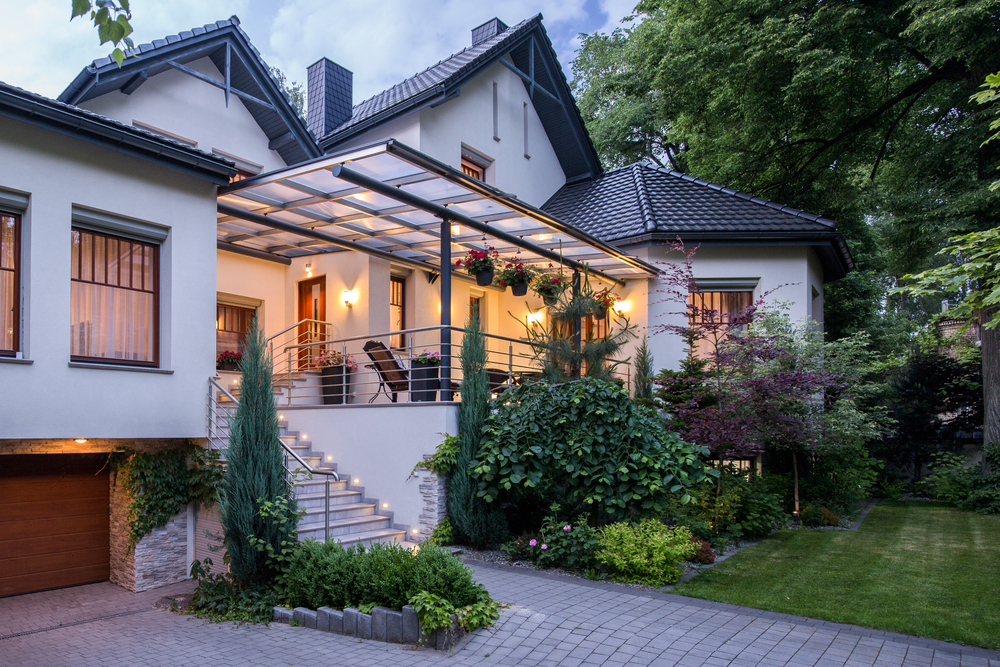
While the house in this picture seems beautiful, we’re not really sure because all of its features are hidden in the dark. But your home shouldn’t become “Plain Jane” just because the sun went down! That means you’ll need to add more lighting than what you’re getting with the house from the builder. 

Let your home’s personality shine around the clock by:

  • Using enough light sources. Interior design recommends using 5-7 light sources per room. You can use the same principle for your home’s exterior! Your standard porch and garage sconces will only cover half your lighting needs. Don’t want to install fixtures on your home? Try using ground light sources like LED pucks or ground lamps! 
  • Create a story. Lighting lets you say more about your style– are you classic, magical, or dramatic? What about luxurious, mysterious, or modern? The outdoor lighting you use will help you create a unique view of your home, even in cookie-cutter developments. 
  • Incorporate safety. Start with walkway lamps, lighting stairs, or highlighting danger zones like pools or ponds if you’re having trouble knowing where to begin your outdoor lighting upgrade. Then you’ll cover the essentials and add some personality too!

Special note: Dressing up your home with light often creates light pollution. So keep your balancing act in mind if you’re a regular star gazer, and ensure that you can easily control when your decorative lights are on. Your local lighting showroom is a great resource for tricks to balance opposing needs!

Need Help?

Proper lighting is essential to a fully functioning home– but it can be challenging to nail balanced brightness, great fixtures, and a budget! Contact the experts at One Stop Lighting for advice on your project!


Decorating a Gorgeous Entryway – 5 Insider Tips You’ll Have to Steal

A front entryway can say a lot about a home! When guests walks in, they know what to expect by the mood you create. Is it elegant or casual? Is there a spot for them to put their shoes and coats, or do they leave them on? Is it well-lit or is there a moody ambiance? No matter the mood you choose, make sure you’re intentional about it!

With a few tips and some inspiration from us, your entryway can say classy, comfortable, modern, or fashionable. They say not to judge a book by its cover, but if we were allowed to judge houses by their entryways, the rest of the rooms would be sure to deliver on beautiful design.

1. Rethink Your Furniture

One of the trickiest parts of styling a front entry is using the space effectively. If you have a roomy entryway, you may have room for a lot of furniture. With a smaller entryway or hall, however, you’ll have to be careful what pieces you choose to include – each one will count!

Benches

A bench is an entryway staple! It provides you and your guests with a spot to sit down while putting on shoes and can even offer storage (depending on what you get). These benches are just as pretty as they are practical.

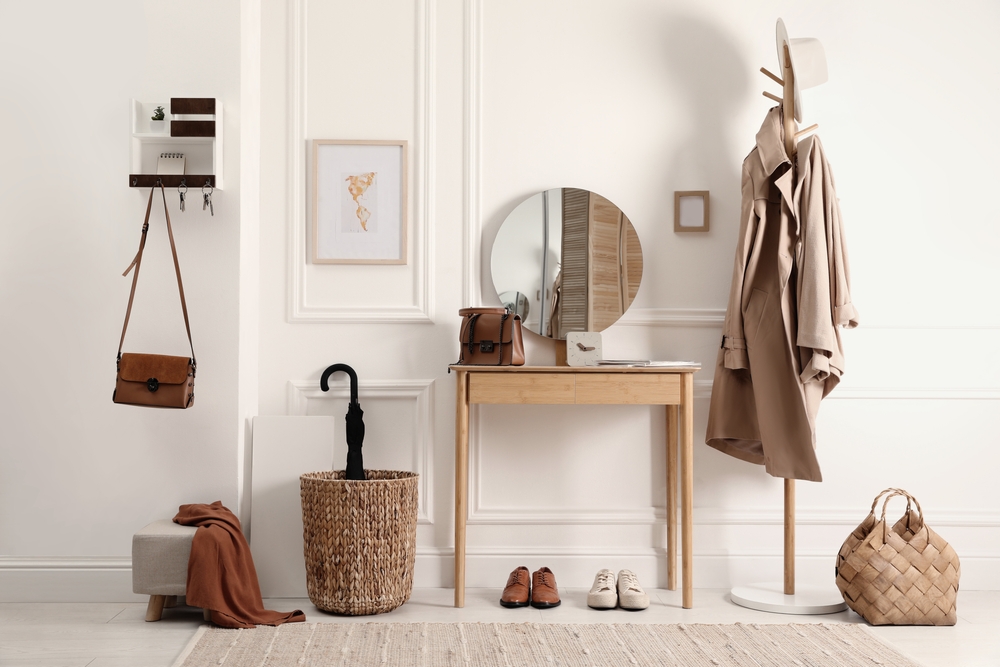
This furniture has a small footprint that would fit even the smallest space! Since the bench doesn’t have built-in storage, there’s a basket for storing shoes or other outdoor accessories. The matching coat rack is functional and space-saving. Throw in a circular mirror for a quick hair check before you walk out the door, and you’re done!

This entryway couldn’t be any cozier! Adding a soft pillow and a blanket to a seating area is a simple trick to make any space feel homey. The only things we’d add are some hooks above the bench for coats and a spot for the shoes that are guaranteed to end up everywhere.

Entry Table

After adding a bench, next on our priority list is definitely an entry table. They can give you extra storage, show off your style, and are a great place for some accent lighting.

This entry table will fit in any space and the baskets give you some storage for your kids’ mess of winter accessories! Adding a couple of lamps on top is always a smart choice, too. They’ll light up your decorations and make them a focal point. The coordinating runner and artwork in this entryway are worth highlighting!

We love the clean lines and neutral-toned wood of this table. The decor is amazing and there’s tons of storage! Neutral books, a vase, a lamp, and a couple of knick-knacks are proportionally perfect.

This entryway is dripping in originality. Instead of using a traditional table, this homeowner chose a small dresser – genius! When you have less space to work with, every piece of furniture matters. Choosing a dresser with drawers ensures you have a place to toss any mess without going to any extra effort.

Built-In Furniture

If you’re looking for a storage solution that’ll contain any mess, creating a mud room-style entryway with built-in furniture will give you more storage than you’ll know what to do with!

When you’re coming back from a long day, the last thing you want to do is take a trip all the way to your room to put away your things. Instead, create a one-stop shop for your everyday items. Hooks can hold backpacks, purses, hats, and jackets. Shoes can be stored under the bench and anything else can go in the baskets above.

Built-in furniture doesn’t have to take up tons of space to be effective! This entryway has all the room you need for storing your essentials. This modern entryway is gorgeous, but we’re obviously giving our gold medal to the stunning light fixture that completes the look.

2. Update or Add Lighting

Speaking of lighting, no entryway is complete without it! From chandeliers to lamps, we have all the styling tips you’ll need to make your entry shine.

Chandeliers

A big entryway with high ceilings calls for a chandelier – the space will feel empty without it. This chandelier will wow your guests from the moment they walk in the door!

This entryway’s door coordinates perfectly with the chandelier they hung! Because the door and chandelier have such warm tones, the gray and brown hexagonal tile was a great choice to cool off the look, while still tying in the warmth. The huge mirror on the wall is also a smart choice because it’ll reflect light, giving this homeowner the most possible lighting for their dollar.

Your entryway doesn’t have to be 16 feet tall to hang a chandelier! This front room’s fixture makes the space ornate and delicate – like something out of a Jane Austen book. Chandeliers can make a statement in any space – just be sure to hang them properly so you don’t run into them!

Chandeliers make any space feel luxurious, but there’s something especially stunning about the way this one hangs over a baby grand piano. You can picture a family gathered around the piano singing carols on Christmas Eve with chandelier’s light twinkling on them – pure magic!

Lamps

A floor lamp is a great way to add dimension and height to your design. This one provides focused lighting for putting on your shoes and coat before you rush out the door. We also love the organization of the shelves in this entry.

Lighting doesn’t have to be complicated! Adding a basic table lamp is a low-effort way to make a big difference in your design. It flows seamlessly with the other tabletop knick-knacks, but it’s also practical.

Sconces

The indoor sconces in this entryway are a smart solution for lighting that won’t take up loads of extra room. This homeowner even added a mirror that will reflect some of that gorgeous light!

This creative entryway’s sconce is modern, chic, and well-placed. Accent lighting is key to making your life easier. No more fumbling around in the dark to tie your shoes or buckle the strap on your heels!

3. Get a Rug

A rug is an anchor for furniture that would otherwise float! Since the entryway is a heavily-trafficked area, a rug can also help protect your floors. They’re easily replaced while flooring is, well…not. 

This brown rug makes this home’s entry area feel cohesive. Without it, the room would feel more like a collection of random furniture! Its neutral color makes it a great piece to keep around even if you switch out furniture.

This jute rug brings warmth and texture to a room otherwise lacking both! It also adds a flair of bohemian that we’re loving.

4. Hang a Mirror

Mirrors are one of our favorite design hacks. They reflect light, make a space look bigger, and are perfect for entryways.

You can’t go wrong with a big round mirror! The black finish on this ties in with the basket and pillow nicely. It’s a piece you won’t regret buying.

This pretty floor-length mirror is in the ideal place for a last-minute outfit check! Do those shoes really work with your outfit the way you thought they would? A quick glance in this mirror and you’re set to go.

A check-the-outfit station is a must-have in an entryway. This arched floor-length mirror is also perfectly placed to reflect natural light from the window and light from this cute pendant.

A classic circular mirror is also a great last-minute stop to make sure there isn’t any breakfast in your teeth! We also love the creativity of the shelving unit here.

5. Get Creative

Possibly the most important tip we can give is to be creative! Every space is a little different so there isn’t a one-size-fits-all when it comes to designing an entryway. These spaces radiate creativity and may give you a few ideas for decorating yours.

When your real estate is less of an estate and more of an apartment, you have to use every inch wisely! The bench and hook shelf combo serves the function of a hallway tree, but is a bit smaller and could be partially DIY-ed to save money. To get even more creative, this homeowner could replace the clock with a mirror and a floor lamp for more dimension and lighting.

This adorable entry uses a garment rack to store shoes and coats. Practical, but still pretty especially if you don’t have a coat closet. The wood tones match the bench and frames and the plants bring in some life!

Creativity and boldness go hand-in-hand. If you’re feeling brave, ditch the neutrals and pick a bright color palette that’ll attract some attention. Go bold, go home, or pick door number 3 and go bold at home!

This space is about as creative as it gets! A sideways ladder-like coat rack looks like something a handy homeowner could DIY. This bench looks like it was also DIY-ed – maybe out of old shutters? Whatever it is, it’s a crafty way to give you a bench with storage underneath.

We’ve got one word for this picture: mood. Instead of picking light and bright colors, try out a richer, moodier color. Nothing will take your entryway to luxury faster than picking a darker color palette! We love the contrast of the gold lamp and sunburst mirror against the gray in this one.

Another clever way to create an entryway is to dedicate a corner in your front room as your entry zone. Putting a rug down makes it feel like a cohesive space, then adding an entry table and bench seals the deal. This space also has some built-in shelves we’re obsessing over! They add a trendy touch and the decorations can be switched out whenever you get bored.

—

When you’re ready to get started decorating your entryway, we’re here to help. Come visit One Stop Lighting for some more expert advice! With our help and these 5 tips, you’ll have a front entry everyone will envy!

12 Simple Bathroom Updates You Can Do Yourself

Bathrooms are spaces that often go overlooked, but when they’re spruced up, they add some serious value to your home! Remodeling can take loads of time and effort (not to mention money), but giving your bathroom a facelift doesn’t have to. These simple tips can give you the bathroom of your dreams.

1. Organize

The last thing you want to deal with at the beginning and end of your day is CLUTTER. Give yourself the gift of a good system! Containers may seem unnecessary, but when you’re rushing out the door, it saves you a headache to just have an easy home for all your toiletries.

2. Add Greenery

Plants bring life, peace, and tranquility into a space. This bathroom would be the perfect escape from the stress of everyday life. The warm tones mixed with the green tell you to relax and take a break. Who are you to tell them no?

3. Change the Hardware

Arguably one of the easiest ways to take your bathroom from the early 2000s to today without spending a fortune is changing the hardware on your cabinets. Finish options are endless! The bathroom above uses gold accents to create a cohesive look with a modern feel.

4. Spruce Up the Walls

If you’re looking for a simple way to make a big impact in your bathroom and have a free weekend coming up, a fresh coat of paint and some elbow grease will make your bathroom feel like a brand new space with just a few hours of work! 

Want to take it to the next level? Bold wallpapers are in, and they really let you show off your personality! This bathroom incorporates the best of both worlds with a simple, painted board and batten wall on the bottom and wallpaper on top! It’s not as hard as it looks – check out this quick tutorial!

Renter-friendly option: Removable peel and stick wallpaper will give you the same look without having to commit long-term. Love the board and batten? There’s a renter-friendly tutorial for that too!

5. Update Mirrors

Bathroom mirrors are often neglected, but they totally change the feel of the room – don’t leave them out! These wood-framed mirrors bring warmth to this bathroom’s design and help to balance out all of the cool tones and polished finishes. 

Renter-friendly option: If replacing your mirror is out of the budget or you’re renting, adding a wood frame to an existing mirror is an easy one-weekend DIY project – just make sure you can easily remove it if you’re renting!

6. Paint Your Cabinets

Painting your bathroom cabinets may take a little effort, but it’s a great way to unify your space or to add a fun pop of color your bathroom. With just a small can of paint and some time, you can take your bathroom from basic to beautiful, even with a low budget. This bathroom’s painted cabinets help to ground the space, and provide much-needed contrast that takes the design from bland to balanced.

7. Replace Old Light Fixtures

Replacing a ceiling or wall light in your bathroom with a modern fixture that’s more your style will give the entire room an instant style boost! You don’t have to play it safe here – find a fixture you love and jump in! We love the way this bathroom shows some serious creativity with these pendant lights that highlight this AMAZING wood accent wall. 

Many homeowners are wary of swapping out light fixtures, but it’s usually a pretty simple DIY. We recommend starting with your vanity light first if you’re on a budget – great front-facing light by the mirror will make the biggest impact on your morning routine!

8. Layer Your Light

Every room in your house should have several light sources to make it feel more comfortable and eliminate harsh shadows and dark corners. In a living room, that’s as easy as tossing in a few lamps, but layering light in a bathroom can be a little trickier.

This bathroom uses a combination of pendant lights and recessed lights to make the whole space feel bright and airy. If your bathroom lighting isn’t working for you, installing an extra wall or ceiling light is the best way to go from dark and dingy to light and bright. 

If your bathroom’s already finished and rewiring isn’t in the cards – don’t worry! Fortunately, there are a lot of easy do-it-yourself options out there. 

LED light strips like the ones in this bathroom are inexpensive and as easy to install as a sticker! They’re usually used behind the mirror or under cabinets, but they can go anywhere you want some extra light. 

You can also replace a light switch or outlet cover with one that has a built-in light – no more blind fumbling for a switch in the middle of the night.

Renter-friendly option: Get a motion-sensing plug-in outlet light or a rechargeable countertop light! These are both non-permanent ways to add a layer of light and keep yourself from bumping into the counter in the dark.

9. Update Faucets

Another way to update the look of your bathroom and conserve water is by switching out your faucets. Look for a faucet with a WaterSense label to reduce your sink’s water flow by 30 percent or more. Less water flow means a lower water bill. With a lower water bill, you’ll have some extra change in your pocket to take your family out for dinner (or yourself–you deserve it!).

10. Dim the Lights

The lights in this bathroom make it a retreat from chaos. When you want a calming bath, dim the lights for optimal relaxation. Dimmable lights give you the flexibility to turn your bathroom into a spa.

Bonus points: Since dimmable lights are more energy-efficient, installing a dimmer switch will leave you with extra money to do more with your bathroom!

Renter-friendly option: Use other lower-light options like strip lights, countertop lights, or LED candles like in the bathroom above.

11. Add a Backsplash

The metallic accents and painted vanity in this bathroom are to die for, but what really makes this space magic is that classic backsplash. Not only does it breathe new life into this space, but it also protects the wall from moisture and staining, so you won’t have to worry about mold or mildew. With a little DIY magic, this bathroom feels complete!

Renter-friendly option: Use a peel and stick backsplash instead! It’ll look like tile without actually being permanent.

12. Update Your Tile Floor

While tile may be a bigger time or money investment, this bathroom clearly shows that it pays off. If you’re wanting to update the floor, choosing a unique tile like this is the way to go. Pro tip: while real tile will give you the best result, you can actually use a stencil to paint your floor. It will give it the same look for a fraction of the cost!

Renter-friendly option: Use removable flooring (peel and stick) to look like custom tile, or cut a vinyl piece to fit the size of any existing tile.

————–

Don’t let your bathroom fall between the cracks any longer! When you’re ready to take it to the next level, give our experts at One Stop Lighting a call. We’d love to help you get started and give you more tips like these.

  • « Previous Page
  • 1
  • 2
  • 3
  • 4
  • 5
  • Next Page »

Recent Posts

  • Improve Your Focus at Work with Light
  • Concentration Hacks for Brain Fog
  • Improve Your Focus at Work With These 3 Types of Light
  • Tips for Good Sleep: It’s not About Counting Sheep
  • Which Forms of Light Cause Long-Term Damage to Your Eyesight?

Categories

  • 2020
  • 2023
  • Accent Lighting
  • Bathroom Lights
  • Bedroom Lighting
  • Bulbs
  • Buying Guides
  • Ceiling Fans
  • Ceiling Fans
  • Ceiling Lights
  • Ceilings Lights
  • Chandeliers
  • Decor & Home Accents
  • Dining Room
  • General Lighting Tips
  • Healthy Lighting
  • Holiday
  • How to
  • Informational
  • Kitchen Lighting
  • Lamps
  • LED
  • LED Lights
  • Life & Style
  • Light Bulbs
  • Lighting Types
  • Mirrors
  • Outdoor
  • Outdoor Lights
  • Recessed Lighting
  • Safety
  • Sleep
  • Smart Lights
  • Styles & Trends
  • Styles and Trends
  • Wall Lights
  • Wellness & Safety

One Stop Lighting

Copyright © 2025 One Stop Lighting